By Raj Singh Bhandall
Wanjara Nomad Collections
There are moments in a country’s life when the stories it tells collide sharply with the truths it has avoided, and Guru Nanak Jahaz is one of those moments. At several points in a nation’s development, its preferred narratives collide with the historical record, requiring public institutions to choose between preserving myth or correcting fact. Canada has often described itself as willing to examine its past honestly. Yet this willingness becomes inconsistent when the history concerns communities who fell outside the early British-Canadian imagination.
The recent characterization of the historical film Guru Nanak Jahaz as “Khalistani propaganda” reflects such a moment. It signals not only a misinterpretation of Sikh Canadian history but an ongoing difficulty Canada faces in confronting the structures that shaped the early 20th century.
The label “Khalistani” applied to a 1914 episode is chronologically impossible. The events associated with Guru Nanak Jahaz (the Komagata Maru) incident, the Continuous Journey Regulation, the 1914 gurdwara sahib shootings, and the execution of Mewa Singh occurred more than sixty years before the Khalistan movement emerged. The analogy is historically unsound: assigning a modern political label to a pre-existing episode is comparable to calling documentation of the Irish Famine an IRA recruitment text. Such claims reveal more about contemporary anxieties than about the events themselves.
The 1914 context centres on exclusion, racialized immigration policy, imperial surveillance conducted on Canadian soil, and community-level fear. It is also a record of dignity: individuals who believed in Canada’s principles long before they were granted equitable treatment by its institutions.
A central factual error in the article is the classification of William Hopkinson as a “Canadian civil servant”. This is incorrect. William Charles Hopkinson (16 June 1880 – 21 October 1914) was not a Canadian citizen; he was born in India to an Indian mother and a British father, served as an Indian police officer, and was trained within the British colonial intelligence apparatus before being deployed to Vancouver as an agent of the British India Office. His mandate, documented extensively in colonial correspondence, was to monitor, infiltrate, and divide Punjabi migrants, particularly Sikhs. To retroactively portray him as a Canadian administrator is not supported by any credible archival record and materially misrepresents the historical reality.
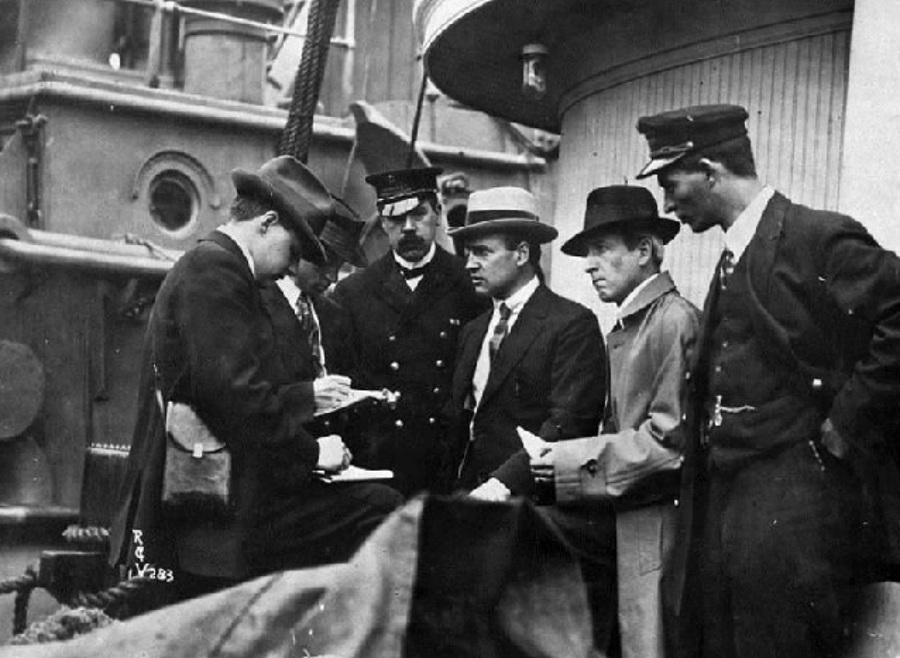
Another key omission concerns the first act of lethal violence in the 1914 saga. On October 5, 1914, Hopkinson’s paid informant, Bela Singh, entered the Vancouver Sikh gurdwara during a service and fatally shot two community leaders, Bhag Singh and Battan Singh. This event is documented in court transcripts, contemporary press coverage, and historical scholarship by Hugh Johnston and Seema Sohi. Its omission makes subsequent events unintelligible. Understanding Mewa Singh’s final actions requires acknowledging the documented environment of surveillance, informant networks, and intimidation.
His concluding statement, recorded in court, notes:
“My religion does not teach me to bear enmity with anybody, nor had I any enmity with Mr. Hopkinson. He was oppressing poor people very much. I, being a staunch Sikh, could no longer bear to see the wrong done both to my countrymen and the Dominion of Canada. This is what led me to take Hopkinson’s life and sacrifice my own life. And I, performing the duty of a true Sikh and remembering the name of God, will proceed towards the scaffold with the same amount of pleasure as a hungry baby goes towards his mother.”
Recognizing this context does not justify violence; it simply prevents historical distortion. A verified historical record of executions in Canada, including the 1915 execution of Mewa Singh, is documented in public archives and compiled in accessible registries such as Canada Executions from 1860 to Abolition.

Canada has, in other contexts, recognized the need for contextual accuracy. In 2018, the federal exoneration of the Tsilhqot’in chiefs reframed their 19th-century actions through a historically grounded lens of anti-colonial resistance. Applying similarly rigorous contextual standards to Sikh Canadian history reinforces rather than weakens Canada’s commitment to truth.
The claim that Canada “was right” to deny the Guru Nanak Jahaz (a.k.a. Komagata Maru) entry for security reasons contradicts established scholarship and governmental acknowledgment. The 1908 Continuous Journey Regulation was structured to prevent immigration from British India. There were no continuous steamship routes from India to Canada; policymakers knew this. The regulation served as a race-neutral mechanism to enforce racial exclusion—a fact confirmed in parliamentary debates and historical analyses.
Additional archival material shows federal departments discussing the forced relocation of Punjabi migrants “Sikh, Muslim, and Hindu alike” to British Honduras (Belize) or Fiji. Internal correspondence from the Departments of Labour and the Interior refers explicitly to the removal of “unwanted” Asian migrants. These were not security concerns; they were administrative strategies for exclusion.
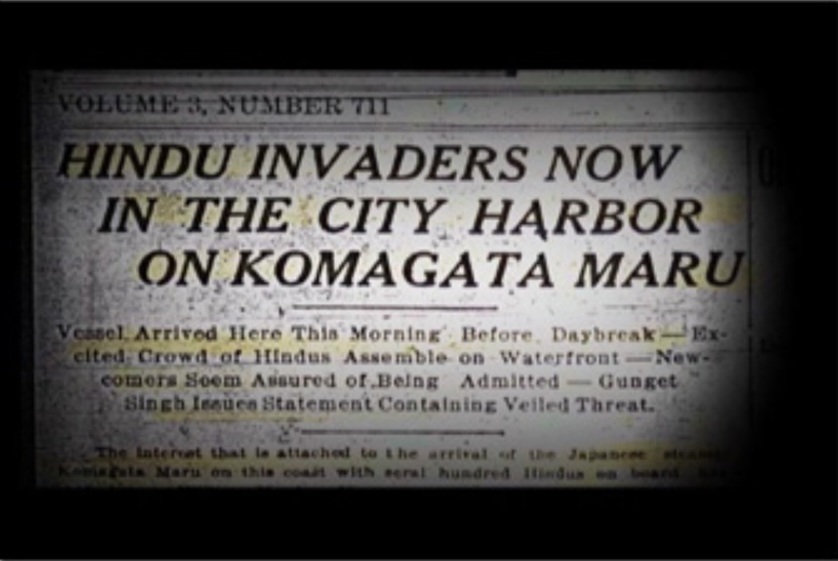
The portrayal of Guru Nanak Jahaz also overlooks the discriminatory press environment of the era. British Columbia newspapers printed recurring headlines such as “KEEP CANADA WHITE” and “HINDU INVASION”. These shaped public sentiment and policy. The film’s depiction of racism is, if anything, restrained relative to historical sources.
The Ghadar Movement is similarly miscast. In 1914, Ghadar was an anti-colonial movement advocating independence from the British Empire. Comparisons to other anti-colonial struggles—Irish, Algerian, Jewish under British mandate, and Indigenous resistance—reflect parallel imperial dynamics, not moral equivalence. British intelligence interpreted these movements through the same lens.
The most problematic element in the original article is the conflation of unrelated periods: 1914, the 1985 Air India bombing, the 1998 killing of Tara Singh Hayer, and modern protests. This constitutes racialized pattern construction linking distinct events to imply a continuous threat narrative tied to a single ethnic group. The Supreme Court of Canada has explicitly warned against such implication-based reasoning in Grant v. Torstar and clarified in WIC Radio v. Simpson that fair comment must rest on accurate, contextual facts.
Air India and the death of Tara Singh Hayer remain deeply painful for Sikh Canadians and for Canada more broadly. Acknowledging these tragedies is essential. Misusing them to distort an unrelated 1914 event obscures both the reality of those losses and the complexity of the later decades.
The investigative work Soft Target has been referenced because it documents intelligence failures and foreign interference in the 1980s. The book has not been formally refuted by the federal government. This does not diminish the seriousness of terrorism as a global phenomenon; it simply clarifies how state institutions shaped public understanding during that period.
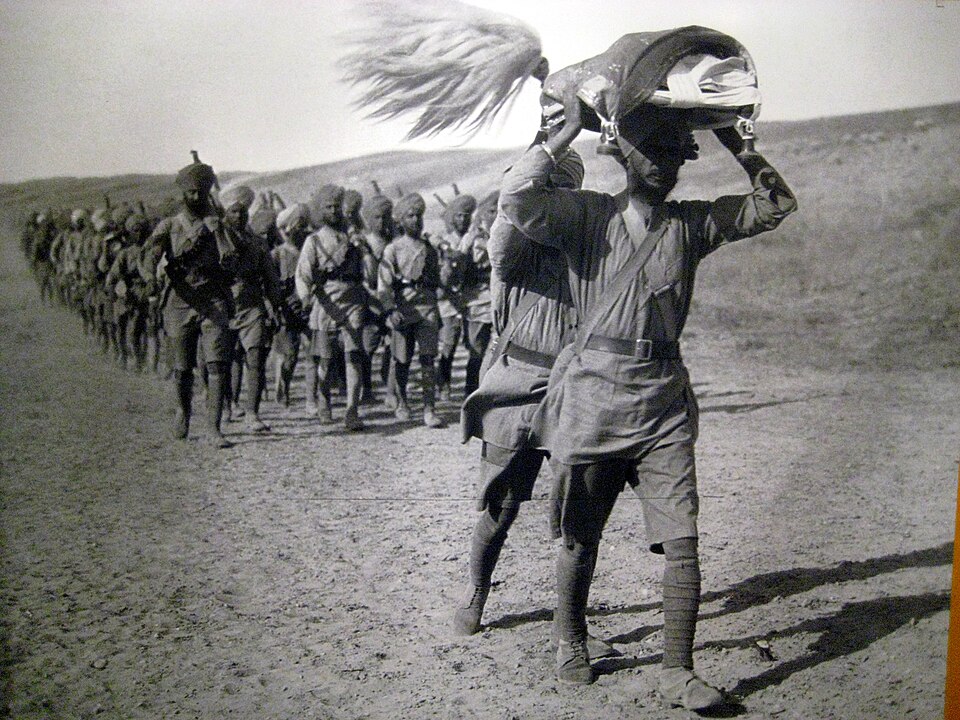
Sikh contributions to global military history are well established. Over 81,000 Sikh soldiers died and over 250,000 were wounded in the World Wars. Sikh regiments received the Victoria Cross in multiple theatres, including Flanders, Burma, and Italy. Winston Churchill acknowledged their significance to the British war effort. Sikh Canadians served in Canadian institutions long before being granted the right to vote. Their contributions to labour, civil rights, policing, and national development are part of Canada’s own historical trajectory.
Situating 1914 correctly also requires recognizing that Canada exists on Indigenous land. The same imperial structures that dispossessed Indigenous nations also shaped the treatment of Sikh migrants in the early 20th century. Canada’s development has always reflected a tension and at times a negotiation between its colonial architecture and its evolving commitments to equality. Sikh migrants contributed to that evolution: their labour built sawmills, rail lines, farms, and transportation networks; their advocacy helped shape civil rights; and their participation helped strengthen the democratic institutions that would eventually open their doors to them.
Historical accuracy strengthens national unity. Chinese Canadians recall exclusion laws; Jewish Canadians remember the turning away of refugees; Black Canadians recall segregation; Irish, Italian, Portuguese, Vietnamese, Filipino, and Caribbean communities recall eras of exclusion; and Indigenous peoples continue to experience the effects of colonial policies. Understanding these histories is not division; it is clarity.
The danger of calling Guru Nanak Jahaz “propaganda” is that it reframes cultural remembrance as political threat. It implies that Sikh storytelling carries an inherent suspicion. It casts public funding of minority histories as dangerous. But this is the mechanism of propaganda itself—collapsing unrelated eras into a single ethnic frame and seeding the idea that some communities cannot be trusted with their own memory. In a diverse democracy, any implication that a community’s historical memory is suspect undermines the principle of equal citizenship itself.
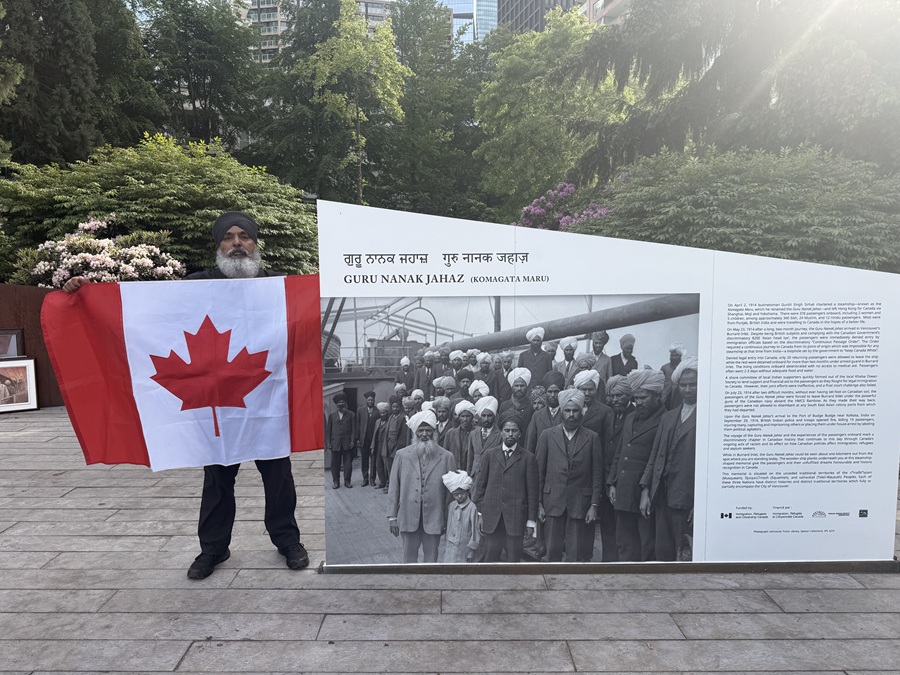
The story of Guru Nanak Jahaz is part of the Canadian narrative; a narrative of exclusion, resilience, and eventual institutional recognition. The cities of Vancouver, Surrey, and New Westminster have issued proclamations restoring the ship’s historical name. Museums, including the Museum of Surrey, have incorporated this history into exhibits using precise nomenclature. The shift from “Dominion Day” to “Canada Day” demonstrates that Canada understands the significance of names. Correcting historical names is neither divisive nor political; it ensures that every community’s story, including that of the early settlers who helped build Canada, is preserved with accuracy and respect.
Our Canada requires journalism that upholds this commitment to accuracy. Public writers and institutions bear a responsibility to avoid conflation, implication, or historically unsupported claims. A mature democracy depends on transparency and humility in how it engages with its past.
The conversation remains open to anyone who wishes to walk through the archival record with us, including Jamie Sarkonak. History becomes clearer when we read it together. In that shared light, Canada grows stronger not because its past was perfect, but because its future rests on precision, integrity, and the courage to tell the truth without fear.
Canada flourishes when every community is able to remember its history with clarity, dignity, and belonging. That is how a nation deepens, and how its people rise together. To restore the truth of Guru Nanak Jahaz is also to acknowledge the quiet sovereignty of Sikh memory, a sovereignty grounded in the saint soldier tradition that has long insisted upon justice, dignity, and the freedom of all peoples. When such histories are treated with accuracy, the national narrative does not fracture; it becomes more complete.
For more information on the Wanjara Nomad Collections, visit its website.
Follow Pancouver on X @PancouverMedia and Bluesky @pancouver.bsky.social. Pancouver is also on Instagram @PancouverMedia.