From shared inheritance to collective stewardship in the year ahead
As the new year unfolds, it offers not a clean slate, but a moment of becoming. It is an invitation to consider how cultural life is shaped, carried, and renewed through collective effort. This is a time not for fragmentation or symbolic gestures, but for thoughtful co-creation rooted in continuity, responsibility, and care. Across communities, disciplines, and borders, the arts are quietly redefining how we gather, how we lead, and how we pass forward what matters most.
Before we ask what will be programmed or presented in the months ahead, it is worth pausing to ask something more essential. What does it mean to belong to a cultural life, rather than simply to consume it? How might our presence, as audience members, artists, or supporters, become an act of stewardship rather than observation?
The year ahead calls for a deepening of trust between generations, sectors, and cultures. Elders carry with them lived knowledge, artistic rigour, and historical memory. Younger leaders arrive with fluency in new contexts, evolving audiences, and emergent forms of expression. When these forces meet in shared purpose rather than hierarchy, culture does not simply endure. It grows like a well-tended instrument finding new resonance with each careful hand that plays it.
For artists, this raises a vital question. In what ways does my practice honour those who came before me, and how consciously does it leave room for those who will follow? For elders, it asks something equally important. What wisdom am I prepared to release so that others may carry it forward in their own voice?
Co-creation as a living practice
Co-creation is often spoken of, but less often practised with integrity. At its most meaningful, it moves beyond consultation toward shared authorship. Artists, presenters, and communities shape outcomes together from the outset. In recent years, co-designed residencies, shared curatorial models, and community-embedded gatherings have demonstrated how this approach deepens both artistic quality and public trust.
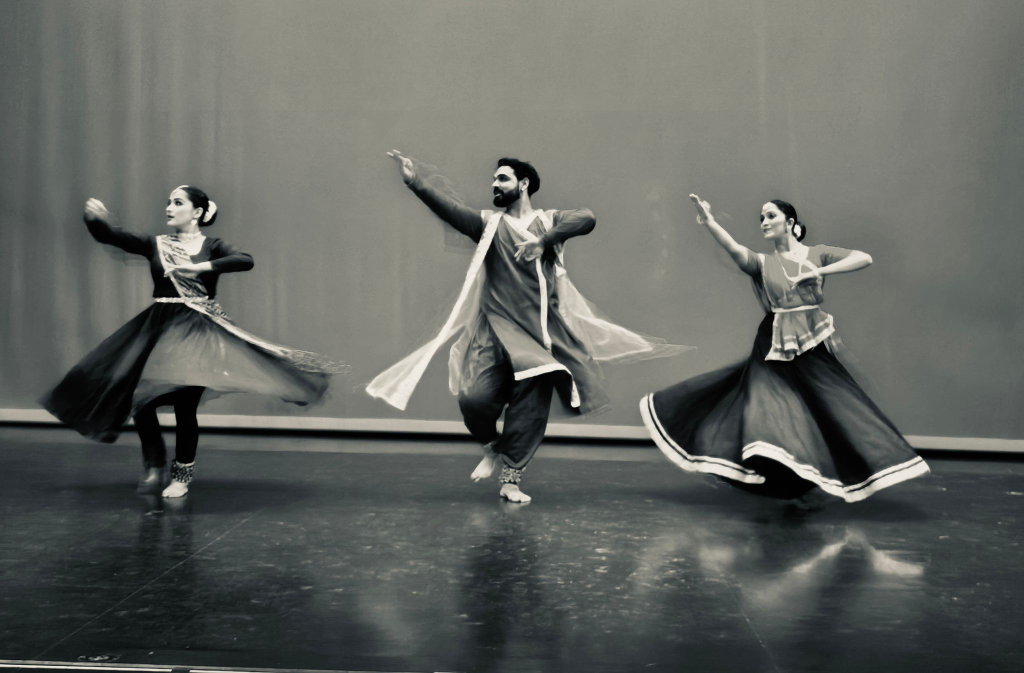
When master artists work alongside emerging practitioners, knowledge does not travel in a single direction. Elders offer lineage, discipline, and philosophical grounding. Younger artists contribute new frames of relevance, access, and audience connection. The exchange becomes reciprocal. Tradition becomes breathable, and contemporary practice becomes accountable. What becomes possible when we stop working beside one another and begin working with one another in full awareness of shared responsibility?
Audiences are also changed by this shift. They encounter culture not as a finished product, but as a living process. This invites further reflection. How might listening, attendance, and advocacy become acts of participation rather than passive support?
Intergenerational leadership and the art of passing the baton
The sustainability of cultural life depends not on individual brilliance, but on how leadership is practised over time. Leadership today must be understood less as authority and more as stewardship. It is a commitment to preparing others to lead with confidence and care. Passing the baton is not an act of retreat. It is an act of foresight.
Mentorship structures embedded within cultural initiatives and touring networks have shown that when emerging leaders are given access to governance literacy, curatorial thinking, and institutional navigation, the entire ecosystem benefits. Established leaders remain present as guides and cultural translators. This ensures continuity without control. Like a relay carried with attention and trust, momentum is sustained rather than disrupted.
I am pleased to share that I have accepted the invitation to join the Association of International Professional Arts Consultants. It is profoundly affirming to be recognised and valued for the calibre of work we carry forward. This work has required sustained vision, intellectual rigour, and an enduring commitment to advancing cultural practices that are too often underestimated in their depth, complexity, and labour. At the same time, I am expanding my mentorship, advocacy, and consultancy through Arts Consultants Canada (ACCA). Through this platform, I am strengthening my capacity to support artists, presenters, and cultural organisations across Canada, creating sustainable pathways for impact, leadership, and equitable collaboration.
It holds particular significance to be welcomed into professional spaces where cultural nuance is respected and where entrenched barriers to inclusion are not minimised or overlooked. Too often, industry leadership unintentionally reinforces cultural divisiveness, while some cultural leadership, equally unintentionally, contributes to the segmentation of our shared heritage. Engaging in spaces where these dynamics are recognised and addressed is both rare and essential to advancing collective cultural equity.
To stand alongside professionals distinguished by foresight, integrity, and a nuanced understanding of what it takes to steward cultural work over decades is invigorating and deeply grounding. Working alongside awarded leaders who genuinely value the level of expertise, discipline, and need for excellence within this field is profoundly refreshing. For many years, much of this work has involved investing in, championing, and elevating the efforts of others without reciprocity, and often through systems that extract rather than practise authentic allyship toward shared cultural mandates.
International partnership as cultural solidarity
Beyond national borders, international collaboration has become an essential dimension of cultural responsibility. When partnerships are grounded in reciprocity rather than extraction, they function as cultural solidarity. Shared values are expressed through sustained relationship rather than declaration.
Collaborative initiatives with artists and presenters across Asia, Europe, and the Global South have strengthened Canada’s cultural voice. They have also positioned Vancouver as a place where exchange is approached with humility and care. These relationships extend beyond touring. They include co-curation, shared learning, and long-term capacity building. For local diasporic communities, such exchanges affirm belonging and recognition. For international partners, they signal a Canada willing to listen as much as it presents.
In this context, an important question emerges. What does it mean to represent a place not through scale or spectacle, but through ethical presence? How might international exchange
deepen local cultural life rather than dilute it?

From segmentation to cohesion
One of the most persistent challenges facing the cultural sector remains fragmentation. Divisions appear by discipline, funding structure, geography, and identity. Yet the most resilient initiatives emerging today resist isolation. They favour cohesion through shared calendars, aligned programming, collective advocacy, and resource pooling.
As this work expands in scale and impact, there is a growing need for patrons, partners, and investors who are committed to strengthening social and emotional wellness, advancing
socio-cultural economic growth, and raising standards in leadership, impact, and cultural literacy. There are meaningful opportunities to invest in classical and heritage arts delivered in their own right, without dilution, compromise, or gatekeeping. Such investment ensures these practices continue to thrive with integrity, authenticity, and enduring resonance.
When community groups, independent artists, and major institutions operate as parts of a larger ecology, cultural life becomes more accessible, humane, and sustainable. Competition gives way to complementarity. Culture begins to move at the pace of relationship rather than urgency. What might shift if collaboration became the starting point rather than a last resort?
An invitation into the year ahead
As this new year of becoming unfolds, the invitation is both simple and demanding. Patrons are called not only to support, but to stand alongside artists and cultural workers as partners in vision and care. Community groups are encouraged to reach beyond familiar boundaries and co-design futures rooted in shared purpose. Emerging leaders are invited to step forward, knowing that pathways of trust and mentorship are being actively shaped.
Looking ahead to 2026–2028, I am beginning early conversations with leadership, programming, and presenting teams to explore cultural collaborations and engagement models designed to create meaningful and lasting impact. Through The Bandish Network and associated partnerships, we are committed to consistent, long-term approaches that support
interprovincial exchange and momentum development across multiple seasons. This work actively invites stakeholder interest and creates tangible opportunities for localised cultural hubs and community leaders to be more deeply involved and invested in shaping the work.
I would welcome the opportunity to hear what you are planning for 2026 through to 2028 and to explore how our respective priorities might meaningfully contribute to shared outcomes, community relevance, and sustained cultural value. If this feels timely, please feel free to book a January meeting here:
This moment represents a meaningful shift toward collective recognition, equitable partnership, and the strengthening of the ecosystems that sustain our cultural, artistic, and community-centred landscapes. I am deeply grateful for this alignment and look forward to contributing strategically, thoughtfully, and with renewed purpose to both international and Canadian networks, through AIPAC and ACCA alike.
The year ahead will require patience and generosity. It will ask us to listen as carefully as we speak. It will ask us to act with the understanding that culture is not owned, but held in common. If leadership is stewardship, what are we each tending this year, and who are we tending it for?
If we choose cohesion over segmentation, becoming over arrival, and shared responsibility over individual gain, the year ahead can mark not just a continuation, but a quiet and lasting transformation. It can be a transformation carried forward together.

Nina Buddhdev is the founder of the Bandish Network, as well as an artist and instructor in YogBhava. Book a call at calendly.com. To connect with Nina Buddhdev via the Arts BC Insight Team, please visit: https://artsbc.org/insight-team. Listen to her B.C. Museums Week Live Podcast: Exploring Models of Cultural Engagement with Nina Buddhdev. Follow Pancouver on X @PancouverMedia. Find Pancouver on Bluesky @pancouver.bsky.social and Instagram @PancouverMedia.