
Although it was a pure family vacation that took me to five countries plus the Vatican between July 29 to August 19, the entire trip turned out to be very educational for the journalist inside me.
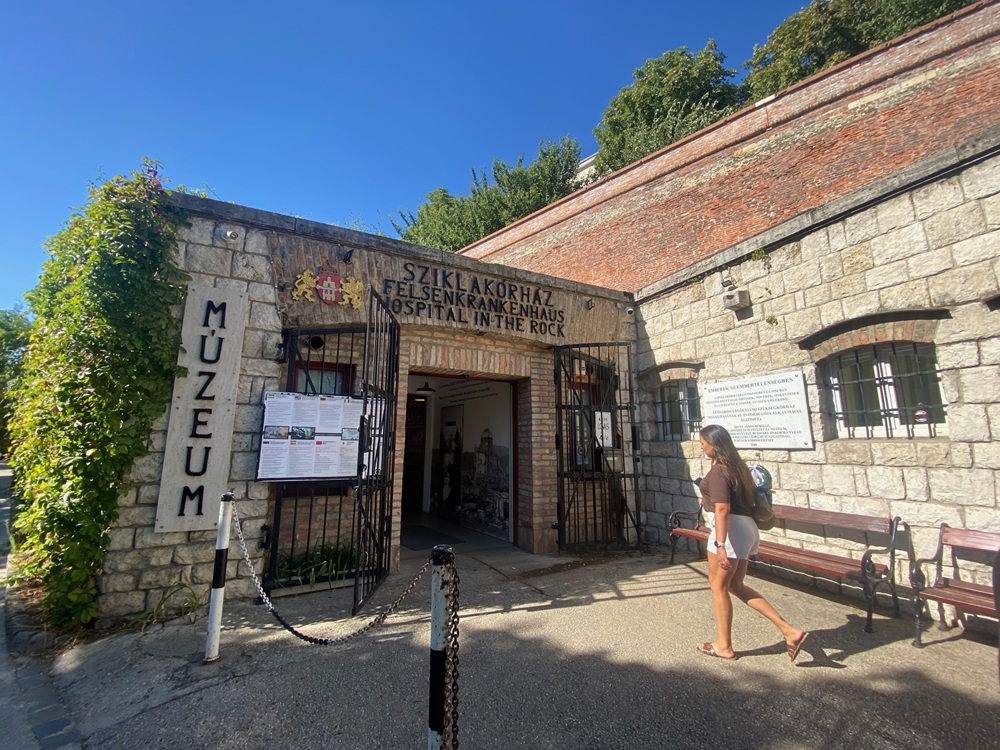
Not sure where to begin—the first stop or the last leg of this journey. Let’s start in Budapest. I had no clue about the museum we were going to see on the eve of August 9, the day Hiroshima was bombed 80 years ago. The Hospital in the Rock Nuclear Bunker Museum, a space created for health emergencies during wars, is currently visited by tourists from all over the world. So, my son and I went in there to see this interesting place.
I noticed a sign leading to the museum shortly after being dropped off by a sightseeing vehicle near a castle. I called my son and told him about it and we decided to go in and see it for ourselves.
An elevator took us down below a street. We immediately booked in for the next guided tour. Thankfully, we attended one in English as we didn’t understand the local language. Unfortunately, we weren’t allowed to take any pictures, but what I saw will be permanently etched into my memory, particularly the last part of the tour that took us to the exhibits of the ruins of Hiroshima bombing of 1945.
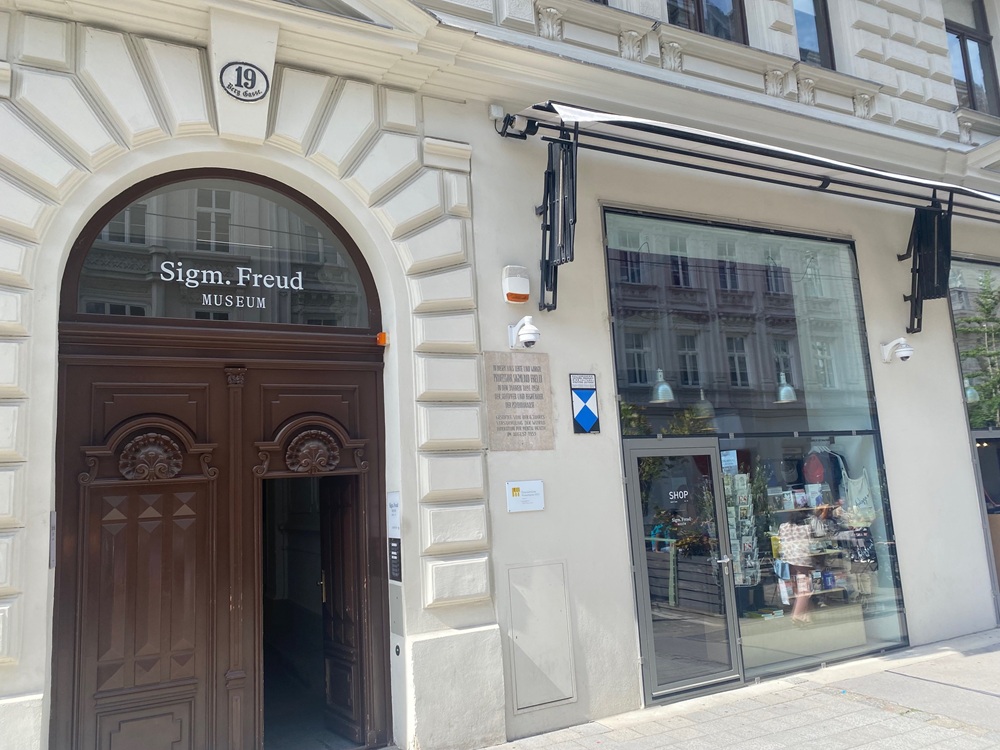
Vienna museums also highlight peace
I tried to take mental notes, yet was completely overwhelmed by watching things like a burnt-out lunchbox and water bottle belonging to kids who were lost in Hiroshima after the bombing. Later, we were taken through a tunnel where the walls on either side were covered with drawings by survivors. At the very end, visitors were greeted with paper cranes hung from the roof, along with a huge portrait of Sadako Sasaki. She was a famous Japanese girl and victim of the atomic bombing who initiated a campaign of making paper cranes, which eventually became symbol of peace.
Only days earlier, we were in Vienna where we visited the Sigmund Freud Museum. A pacifist, he was a contemporary of Albert Einstein with whom he communicated. The museum preserved a few letters exchanged between the two. The correspondence was also published in the form of pacifist manifesto. I later bought a copy of “Why war?”, based on letters exchanged between the two great men, from the museum gift shop.
If this weren’t enough, we also visited the Vienna Teddy Bear Museum close by. It displayed teddy bears huddled together with a sign that read: ”Make Friends Not War.” Another one listed European and Middle Eastern countries that have been bombed by powerful nations.
As we travelled through Czechia, Austria, Germany, Hungary, and Italy over a period of three weeks I kept searching for news almost every day. The Palestine was under continued attack leading to mass starvation while there seemed to be no let-up in the Russia and Ukrainian war. Civilians, including women and children, were getting killed.
Palestinian flags hang from Italian windows
What gave us hope were Palestinian flags being lowered in solidarity from windows of several buildings in different parts of Italy. In Florence, someone displayed a sign declaring “Stop Genocide of the Semitic Palestinian People“ while in Rome I noticed graffiti asking for the release of a Palestinian political prisoner, Anaan Yaeesh. Around this time, BBC reported on its website about the death of a Palestinian brought for treatment to Italy.
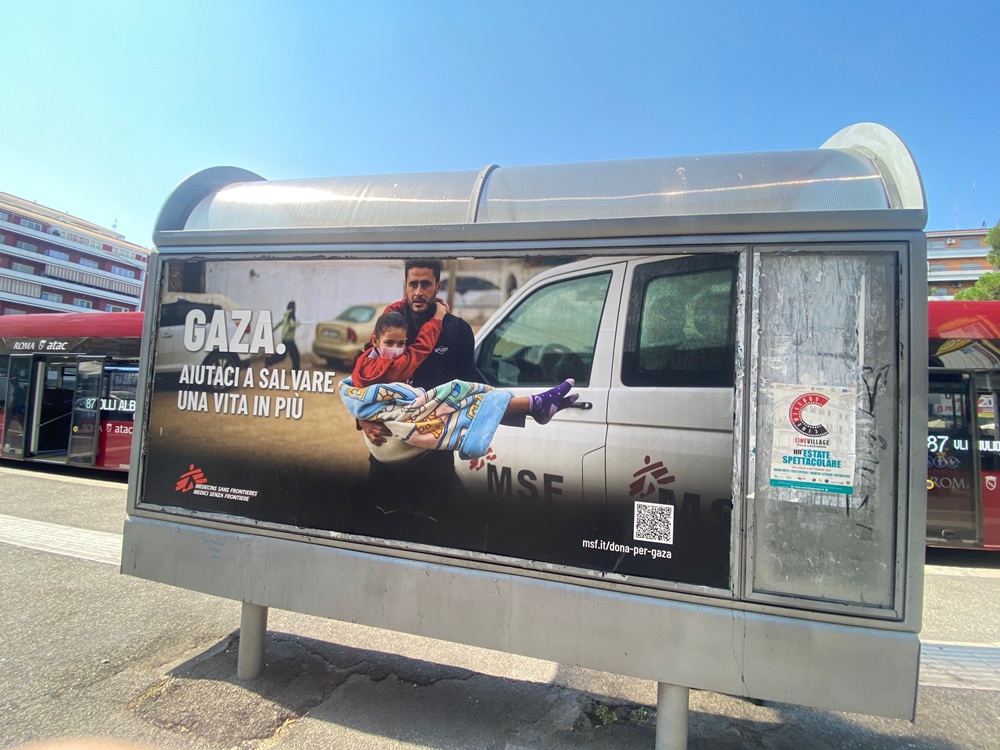
In the meantime, Médicines Sans Frontières’ signs asking for international help in Gaza were commonly seen at several bus stops. The visits to the museums of the past only reinforced my belief that history is present and we need to continue to carry forward the legacy of people like Sasaki, Freud, and Einstein.
Gurpreet Singh is a B.C. author and co-founder of Radical Desi. Follow him on Bluesky @gurpreetradical.bsky.social. Follow Pancouver on X @PancouverMedia, Bluesky @pancouver.bsky.social, and Instagram @PancouverMedia.




