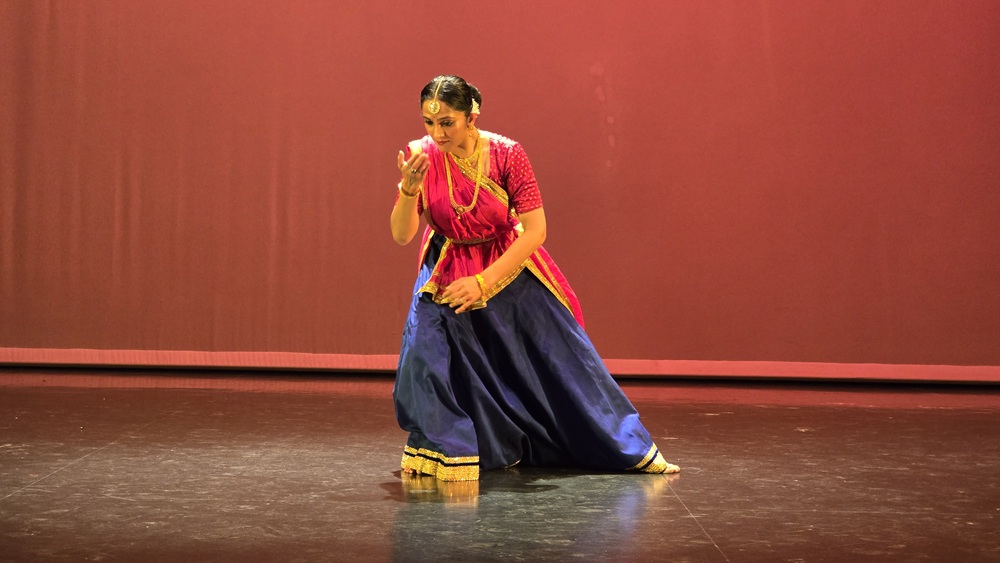
On Sunday (November 23), the Evergreen Cultural Centre became the setting for Shubham Bhavatu, an offering that exceeded the boundaries of performance and stepped into the realm of communal transformation. Conceived over a year ago and shaped with patient deliberation, the work unfolded before a full theatre whose attention remained unbroken.
The audience appeared to move in quiet synchrony with the production, drawn into a vivid synthesis of classical dance, lyric, music, visual art, and reflective prose. What emerged was less an evening of performance than a moment of artistic convergence, in which the essence of Kathak travelled through the space like a living metaphor.
The presentation was created in honour of those I have lost in recent years: a dear friend to cancer, my mother, and a mentor who once served as my sanctuary. Shubham Bhavatu became an invocation of gratitude as well as a testament to the fragile architecture of human connection. When life reveals its impermanence, we are compelled to remember the rare luminosity of relationships that are respectful, nourishing, and steadfast. These memories, like embers shielded from the wind, continue to illuminate our path.
Central to my practice is the creation of environments in which young artists experience genuine belonging. Two decades ago, I entered this community and encountered marginalization, territorial behaviour, and an isolating absence of welcome. These experiences impressed upon me the urgent need for spaces where creativity may flourish without fear, and where trust, imagination, and artistic courage are recognized as essential conditions. My commitment to cultivating such spaces is rooted in the values that define our cultural lineage: Samp, Suradbhav, and Ekta. They form the quiet architecture of every initiative I undertake.
I hold immense admiration for Puneet Singh, Akshaya Surve, and Fiana Kawane. Their intelligence, sensitivity, and devotion to the integrity of their craft shaped the Kathak offering at the heart of this production. In an artistic climate often overshadowed by comparison and competition, their presence restored my confidence in the sanctity of sincere collaboration. Their work was marked by dignity, mutual respect, and a refined sensibility that carried the production with uncommon grace.
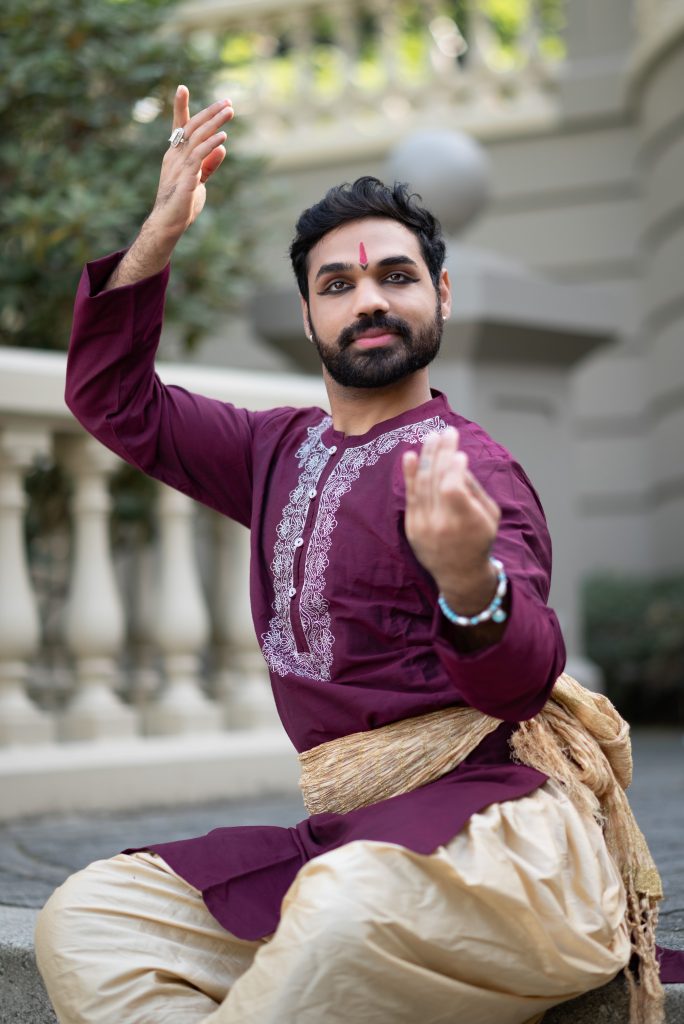
Puneet brings an instinctive quality of nurture to every environment he enters. His work with Fraser Health evidences his commitment to the wellbeing of others, while his intuitive guidance nourishes mind, body, and spirit. Despite having lived in British Columbia for less than a year, he has become an anchoring presence in our community, meeting people with a respectfulness that feels both grounding and restorative.
Akshaya stands as a steady pillar for her students. She embodies warmth, erudition, and integrity, and her refined presence is matched by a depth of pedagogical generosity. During her short time in British Columbia, she has earned the esteem of the Kathak community. Her contributions to this production were characterized by quiet strength and an elegance of thought.
Fiana, a young mother to a seven-month-old child, entered the process with a luminous calm. Her Japanese and Indian heritage infuses her dance with a delicacy and clarity that resemble water moving over stone: gentle, persistent, and resonant. Her perspectives are articulated with remarkable transparency and respect, and her humility deepens the coherence of the ensemble.
I extend particular appreciation to Ajit, whose silent constancy has been an indispensable form of support. His presence is one of those rare certainties that appears without fanfare and without hesitation, and it is often such steady, unspoken contributions that uphold the very structure of artistic work.
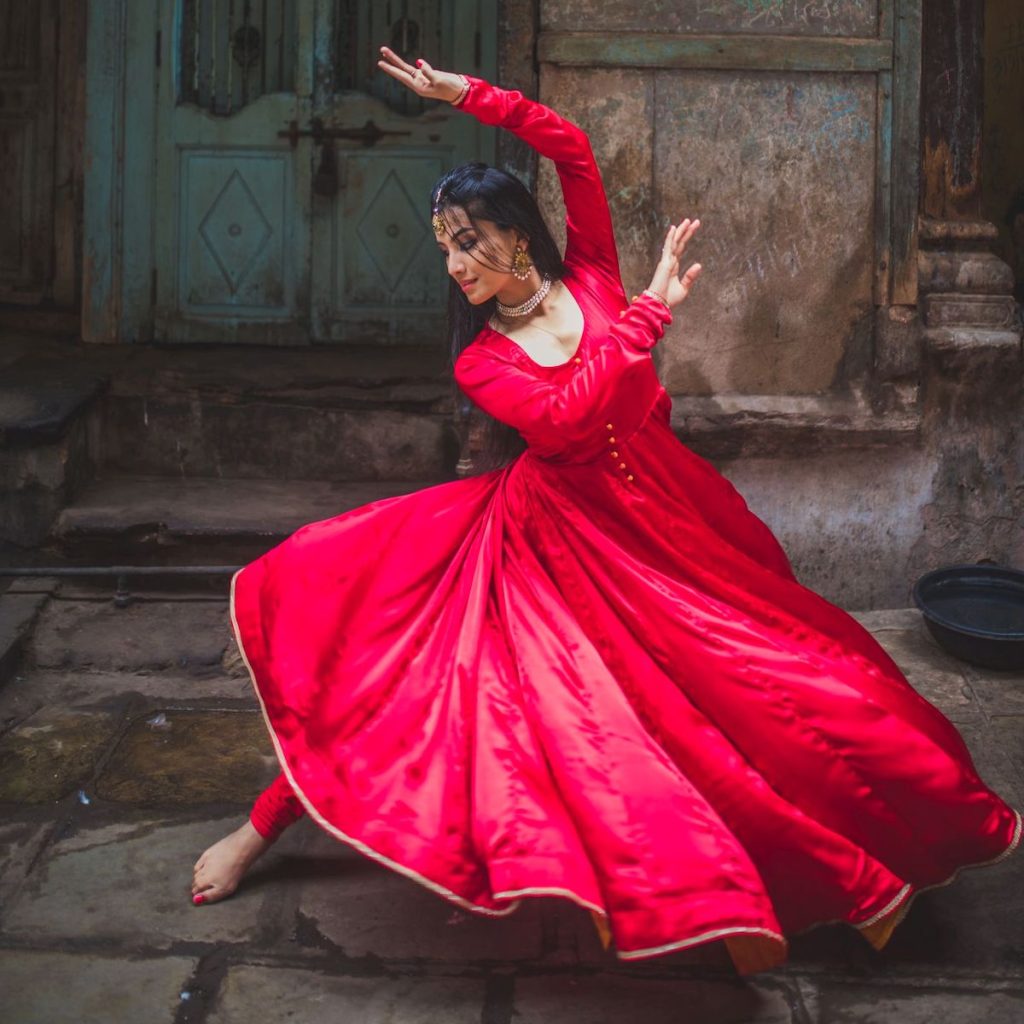
It would be remiss not to acknowledge the Kathak community of British Columbia, whose solidarity with the artists and whose unwavering encouragement of the art form have strengthened the conditions for this work. Their presence has affirmed that the preservation of classical traditions is a communal responsibility rather than an individual pursuit.
Shubham Bhavatu not only honoured the classical lineage but also raised the representational standard for pure, undiluted classical arts in this region. Its accuracy of form and fidelity to tradition offered a level of representation seldom witnessed, allowing the work to stand as a benchmark for integrity in classical artistic practice.
This initiative was realized on a very modest honorarium. It was sustained by conviction rather than commerce, and by a steadfast belief in the emotional, social, and cultural necessity of presenting work that remains true to its lineage. The privately absorbed expenses and the long, meticulous hours of rehearsal, writing, refinement, and envisioning testify to a devotion unmotivated by financial reward. My gratitude to the Evergreen Cultural Centre is profound; their logistical support and professionalism shaped the conditions in which this work could take its fullest form.
Shubham Bhavatu is intended as a foundation rather than a culmination. It seeks to foster cohesion, inspire catalytic thought, and strengthen camaraderie among artists. Working with Akshaya, Puneet, and Fiana has been an unqualified pleasure. Their reverence for their practice and their unwavering commitment to collective upliftment are qualities I regard with sincere admiration.
As artists and healers, they share their craft with an authenticity that aligns naturally with the visual artworks I present, accompanied by an original sarod score by Hriday Buddhdev. His contribution affirms the intergenerational continuity of artistic devotion and the quiet loyalty that sustains our community from within. The celebration of any heritage is revealed as much in what is done in absence as in what is offered in presence. As i said at the concert, I cant tell you how much I love these fine artists and am so grateful for the love they show me. They inspire me.
My heartfelt gratitude extends to Dr. Arun Garg and Lori ji for their constant blessings, to all Gurus, musicians, patrons, poets, patient hubby’s, supporters, kathak practitioners, teachers, and well-wishers, near and far. Your encouragement remains the wind that lifts every new endeavour. I offer particular thanks to Akshaya, Puneet, and Fiana for their trust and their fidelity to the vision we share.
With profound appreciation,
Nina

Nina Buddhdev is the founder of the Bandish Network, which presented Dance As Blessing: ‘Shubham Bhavatu’ on Sunday (November 23) at the Evergreen Cultural Centre. This article originally appeared on the Bandish Network Facebook page. To connect with Nina Buddhdev via the Arts BC Insight Team, please visit: https://artsbc.org/insight-team. Listen to her B.C. Museums Week Live Podcast: Exploring Models of Cultural Engagement with Nina Buddhdev.
Follow Pancouver on X @PancouverMedia. Find Pancouver on Bluesky @pancouver.bsky.social and Instagram @PancouverMedia.