As 2024 draws to a close, we’re highlighting memorable, thought-provoking, and entertaining quotes from Pancouver’s second full year. All of the comments below appeared in our articles since January 1, 2024. We hope you take as much pleasure reading these quotes as we had compiling them. Happy New Year!
Observations
“I ask this singular question: what kind of world would we inhabit if trees were the rulers and kings?”
— artist Manjot Kaur
“When we see wood in a room, we don’t necessarily think anymore that they were trees in certain places.”
— storyteller and artist Shen Xin
“Poetry shouldn’t just be written for the person who can analyze it.”
— dub poet Lillian Allen
“We are defined by who we are in life, whether that’s as a mother or by what we do or by who’s attached to us or whatever. It all gets erased when you’re on a boat as a refugee.”
— playwright Sangeeta Wylie
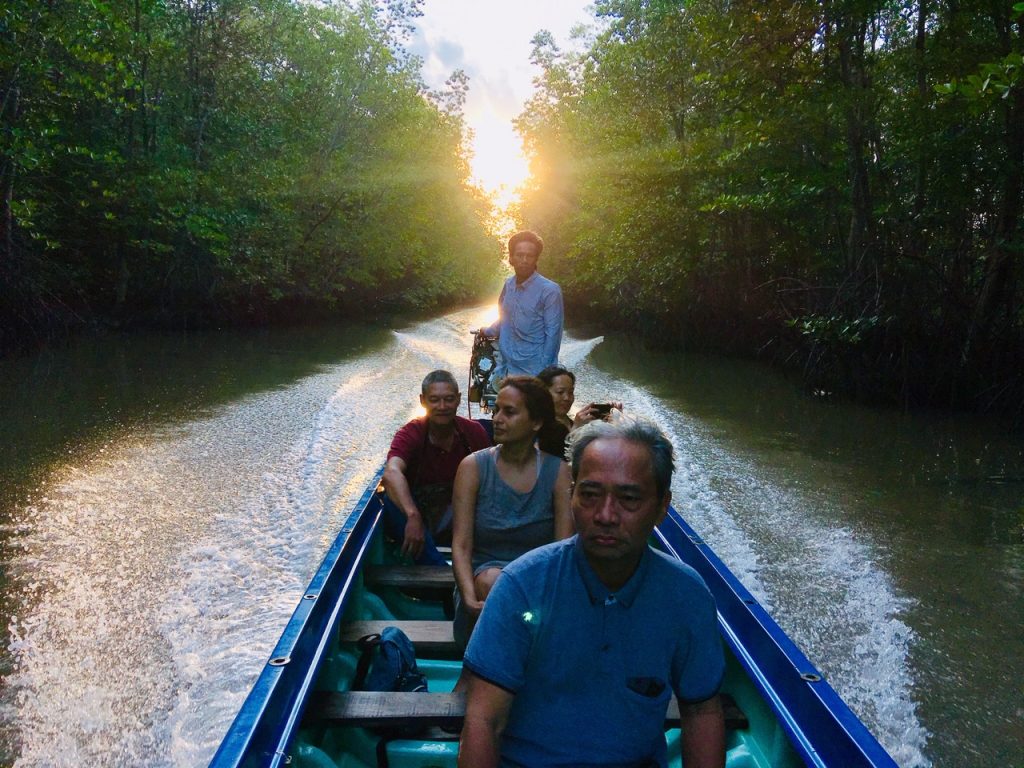
“For me, good and meaningful intercultural work isn’t a one-way street. It isn’t a two-way street. We’re actually all in the yard together. Let’s tend the garden.”
— Music on Main artistic director David Pay
“We think we are so modern right now, but casteism has not gone from our minds. Self-taboos are a cause of discrimination in our society. We have so many things that we have to address.”
— author Surinder Neer
“I believe in fiction as a way towards the future. I think it might come from my trauma history in war—this escape to fiction that made me almost believe in fiction more than reality.”
— anti-disciplinary artist Ghinwa Yassine
“You never know what battle someone is fighting in this moment.”
— musician, writer, and TV host Christina Couture

“Sometimes, we become who it is that we are because somebody created a huge impact on a life.”
— dance artist, musician, and author Laura Grizzlypaws
“It’s called Pathological Demand Avoidance because demands or expectations are one of the things that we perceive as threats. So, if somebody asks us to do something, our nervous system will respond with fight, flight, freeze or fawn.”
— artist Katherine Duclos
“We allow ourselves to keep hating and to be in anger, because we know as soon as we recognize that and let it go, we are going to have to deal with our pain. That’s the shadow work. That’s the gold. The pain is the gold—and it’s here.”
— choreographer and dancer Arash Khakpour
“What whiteness symbolizes can exist without a white body or a white person.”
— scholar S. Heijin Lee

“There was this interesting theory that dividing the middle class into upper and lower middle class pits them against each other. And we keep doing that as women, because white women turn on women of colour, women of colour are turning on queer women, and queer women are turning on trans women. It’s just this constant. We let the patriarchy pit us against each other in a way that asks us to build our perfection on the backs of really imperfect women.”
— playwright Natasha Chew
“I think it’s really incredible what women can do once they manage to break away from the patriarchy, which sounds cliché but it’s true.”
— filmmaker and journalist Roberta Staley
“To me, it is important to share the good—to inspire hearts, to spur spirits—because that’s what humans are. Another big part of my artistic practice is to always surround myself with better artists than me in the hope that I can learn from folks who can enhance my work.”
— choreographer and performer Lua Shayenne
“I’m lucky to be doing well in many ways, but then I still have to meet all of that with hard work.”
— actor Howard Dai

“Art and life are quite interwoven; you can’t really separate them. Art is part of me; it shapes the way I think and provides me with a lens through which to be both sensitive and critical.”
— Lynn Chen (陳勵瑩), program coordinator, Centre for Global Asias
“I will get press kits and booking requests from somebody who wants a massive A/V situation at a small outdoor, rural festival. That says to me that you did not do your homework. That’s not how we book and it’s not what we book. That’s disconcerting.”
— Mission Folk Festival Society executive and artistic director Michelle Demers Shaevitz
“I think when you speak to people in their own language, it always makes them happy.”
— TV host Leo Seewald
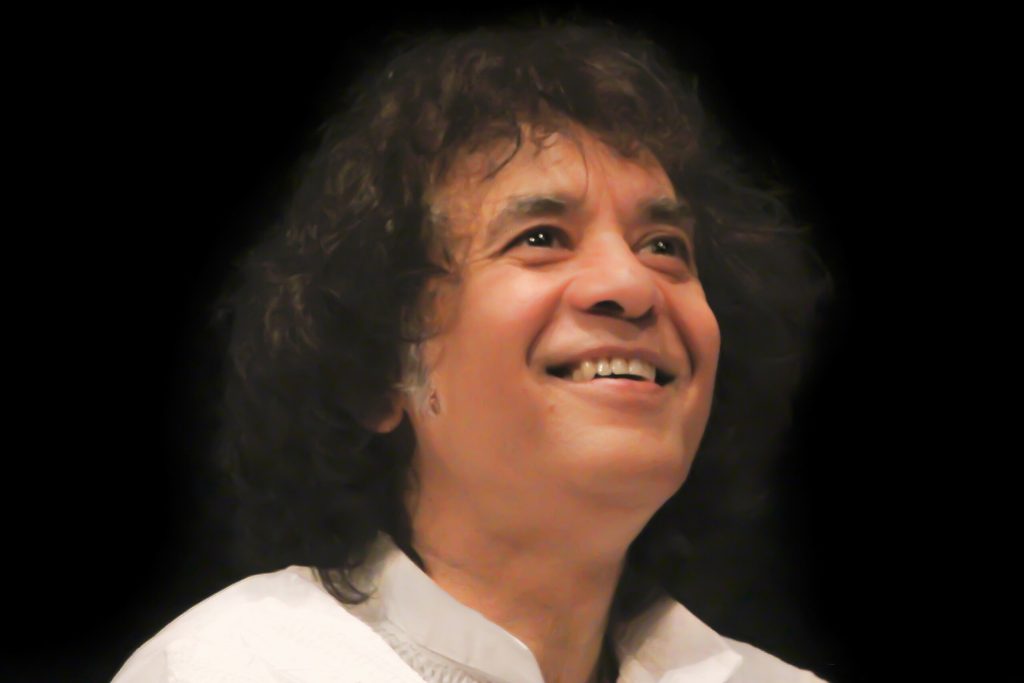
“We are all students from the day we live to the day we die.”
— musician Zakir Hussain
On artistic expression
“Even for me, as a professional artist, there will be many failures along the way. So, if I can provide a safe space for a student to fail, I think that’s really great. It gives them a chance to learn and grow.”
— musician, songwriter, and educator Jacqueline Teh
“A folk tune should be open to regional interpretations. It can be modified.”
— musicologist Szu-Wei Chen
“Most of the western music is based on major-minor keys. But the Chinese music is mostly based on the five tones of the scale. So, it sounds different. That’s why when people hear certain music, they can tell, ‘Oh, that’s kind of a Chinese style.’ This is the major difference.”
— Vancouver International Music Festival committee president Lynn Liu
“Yes, I am of Asian descent and I am highly influenced by my background, my heritage, all those things. But when I think of the work that I like to make, I like to leave space for interpretation.”
— choreographer Yvonne Ng
“There are no limits to my artform. So, I can do sculptural work. I can do flat or three-dimensional. It can be as big as a chair for somebody to sit in. Or it can be really tiny, like jewellery.”
— felt artist Chantal Cardinal
“Sometimes, it’s not that easy to pursue what you want in a foreign place…but it’s important that you keep following your dream.”
— interdisciplinary artist Peisen Ding
“I want this Alex See Project to be the fullest expression of everything. So, I want it to encompass my dance, my art, and my music.”
— musician Alex See
“You can be controlled; you can be fluid; you can be explosive. There’s a wide variety of things that you can choose from popping. It’s very dynamic.”
— street dancer Eric Cheung

“I don’t want to just get hung up in making pleasant and interesting surfaces. That’s part of what I do. But it has to lend itself to an idea.”
— embroidery artist Bettina Matzkuhn
“There’s a lot of oversexualized imagery of particularly light-skinned East Asian people. Don’t forget about the brown Asians! I’m being cheeky, but I really do want my drawings to be reminders of how powerful and gorgeous brown and queer people are.”
— artist Tajliya Jamal
“In my case, my body was cheap. I didn’t have to pay for it and I didn’t have to get permission.”
— artist Paul Wong
“I identify as ‘she/her’, but sometimes ‘he’, because I’m also a drag artist. You know, I look great in a moustache.”
— choreographer and dancer Tara Cheyenne Friedenberg

“I feel like I’ve always been trying to talk to myself through my music. This is how I really want to solve my own personal feminine energy. And how I do this is not just by talking to a motherly figure or in soft, patronizing voices in my head. It could be something as simple as connecting to your body.”
— singer Serrini
“[Henri] Cartier-Bresson always said you have to wait for the decisive moment. But sometimes, you can create a decisive moment.”
— photographer Alex Waterhouse-Hayward
“As a creative writer turned musician, I strive to write music that emotionally connects and spiritually heals.”
— singer Tze
“After starting my life here, I began to create the person I wanted to be. I am a Chigiri-e artist. I tore down my carefully presented appearance, and destroyed the expectations placed upon me! I glued myself back together with courage, and broke through my imagination!”
— artist Leanne Lai Hildebrand

“We have a linear perspective in western paintings or western art, but we don’t have that in Chinese paintings.”
— painter and printmaker Kai Liu
“I’ve been dancing since I was a kid. And one of the reasons I dance is because of Bollywood music,”
— actor and playwright Munish Sharma
“We say that flamenco is a way of life. It’s not just when you are on-stage. It is how you live.”
— performer Tamar Ilana
“North American pop culture makes us think of dragons in the European sense, with the lizards and the wings. But in Asian folklore, it’s more associated with the ocean…and with life and nature itself.”
— artist Kristina Luu

On representation
“There’s no place in the City of Vancouver—in my own territory—for me to harvest cedar.”
— Musqueam cedar artist Rita Kompst
“Unless it’s an Asian movie where it’s an all-Asian cast, it’s really rare to see two Asian males in the same film. So, that’s why we created [Extremely Unique Dynamic]—so that we can be in it together and we could be two very different people within the movie, as well.”
— filmmaker Harrison Xu
“Over the past year, I’ve been exploring my own identity as a more masculine-presenting Queer person. And I really wanted to use that character as a way to explore the idea of being brown and butch—how those two things can exist together.”
— playwright Lee Nisar
“But we are here; we have been here; and we are not going to go anywhere. My mission as an artist is to centre our joy and our hope and our love because we need to see it.”
— filmmaker Fawzia Mirza

“I started realizing that a lot of the literature that I read and was exposed to was very Eurocentric and really focused on the western canon. Despite the fact that I am bilingual and grew up bilingual—and have been exposed to Chinese literature since I was quite young—it wasn’t really being taught in the classroom.”
— poet, writer, and translator Yilin Wang 王艺霖
“I had to be somebody else for people to kind of pay attention to me. I’m discovering at this stage of my artist trajectory, I should have been more authentic to myself all along.”
— musician Scott Hsu
“I feel it is important we carve a seat for systemically excluded artists at the creation table, with an overarching mission to give agency to narratives foregrounding QTBIPOC experiences with authenticity and sensitivity.”
— theatre artist Tricia Trinh
“When you were Indian in the ’80s and ’90s, you either took on white culture or Black culture to survive. You were not accepted as being Indian back then.”
— filmmaker Bobby Singh Brown

“I’m of a generation where you weren’t encouraged to really explore your culture in the way that I feel like we do now. It was assimilation—get rid of the accent.”
— Vancouver Civic Theatres director Natalie Lue
“I want to utilize the music—and the funding from music—to start education centres in the villages of Taiwan.”
— musician Kapa Arkieh
“I’ve been told outright by jury members for some awards shows that my nominations were for diversity. Whether that is true or not doesn’t feel good. And it’s insulting and condescending to Indigenous peoples, I think, to simply nominate someone because it hasn’t been done yet, or because of who directed the show. I’ve seen brilliant performances by Indigenous actors who weren’t nominated, for shows that just didn’t get seen because the director wasn’t Martin Scorsese.”
— actor Carmen Moore
“My presence as a proud Palestinian on-stage is a form of resistance on its own—to say my light doesn’t dim just because it’s been deemed so.”
— tenor Haitham Haidar

“What does it mean to be Filipino? Am I Filipino enough? And even on the flip side, what does it mean to be Canadian? Am I Canadian enough? With these two identities, do I have an answer? I don’t think so. It’s an evolving search in this country.”
— playwright Kamila Sediego
“In Lilium’s music, we are trying to imagine a world in that every culture is actually equal—which means every musician would just think, ‘Why not put my music with this neo-soul or with this punk rock?’ ”
— musician Lin I-Shuo
“The word ‘impaired’ essentially means broken, right? So, if you think about unconscious bias and if you think that I’m broken before you even meet me, I can never achieve equity. The other part of that is we are also setting up a power dynamic that sighted people are not broken and blind people are broken.”
— blind photographer Amy Amantea
“This archive of VANDU is called a guerilla archive because it’s presenting a dissident perspective—and monumentalizing and commemorating the lives of people who have kind of stood against the system.”
— curator Olumoroti Soji-George

“The company’s name is The Falling Company, with the hopes of us falling as dancers and surrendering into what that means as artists. But also, to hopefully have these systemic structures that have been in place to eventually fall.”
— choreographer Marissa Wong
“There are lots of opportunities for Indigenous creators now. People are genuinely curious about our story and our history.”
— filmmaker Ryan Dickie
On communities
“We’re first and foremost Canadian. To us, ‘Chinese’ in Chinese Canadian is an adjective, which is like a ‘happy’ Canadian, ‘chubby’ Canadian, ‘laughing’ Canadian, or ‘tall’ Canadian.”
— Chinatown Storytelling Centre head of content and interpretation Susanna Ng
“Now, museums are recognizing the importance of co-curating and co-creating knowledge with people in the communities who are knowledge keepers and knowledge holders. My work in this realm is really focused on the relational aspects of curating—so, focusing on the process of working with people rather than just focusing on the end product.”
— Museum of Vancouver curator of urban cultures Denise Fong
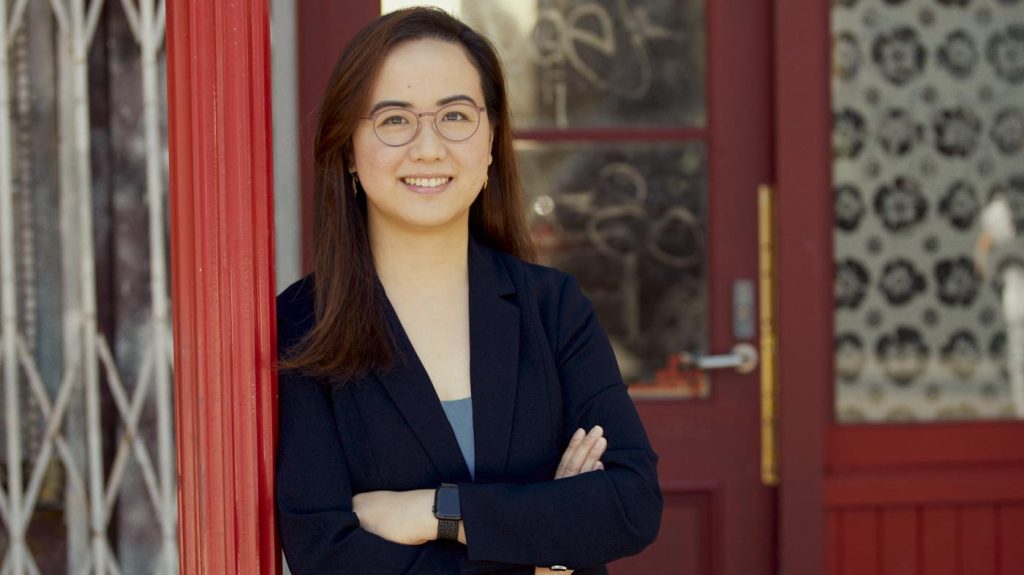
“We’re intentionally creating a space where there wasn’t previously a queer space, and turning it into this place for our audience to join us in this act of celebration and catharsis and community. The way that we viewed queer space in our research is that it can be anywhere—and has often historically been anywhere.”
— interdisciplinary artist Alexandra Caprara
“Why are you nostalgic for a home you’ve never experienced? Why are you attached to things that you know could be said as not yours?”
— composer and new media artist Remy Siu 蕭逸南
“Filipinos are known for our passion in everything that we do, whether that’s a job or even a hobby. We will put our whole heart into it.”
— choreographer and dancer Gabrielle Tumaneng
“I always tell people that I grew up in a different time. We lived in log cabins. We had no electricity and no running water. So, we lived by candlelight.”
— artist Jerry Whitehead

“There are Chinese people today that can race their ancestry back to the Kaifeng community, which is interesting. In recent years, I think a number of them have actually made Aliyah and moved to Israel. And some of them are in the process of conversion.”
— author Richard Ho
“There’s this thought that ‘Oh, if you’re on the spectrum, you can’t make eye contact; you have flat effect; you don’t have a sense of humour; you have voice-modulation issues; you’re socially awkward.’ All of those things, I think, are stereotypes.”
— actor and acting teacher Aaron Craven
“With Ensemble, I hope the artwork speaks to the diversity of Filipino culture and celebrates the thriving Filipino-Canadian community. More broadly, it speaks to a need to prioritize the recording and preservation of diasporic communities’ histories and legacies.”
— visual artist Karen Zalamea
“I just wanted to fill the gap of Cantonese urban music.”
— hip-hop artist handwash
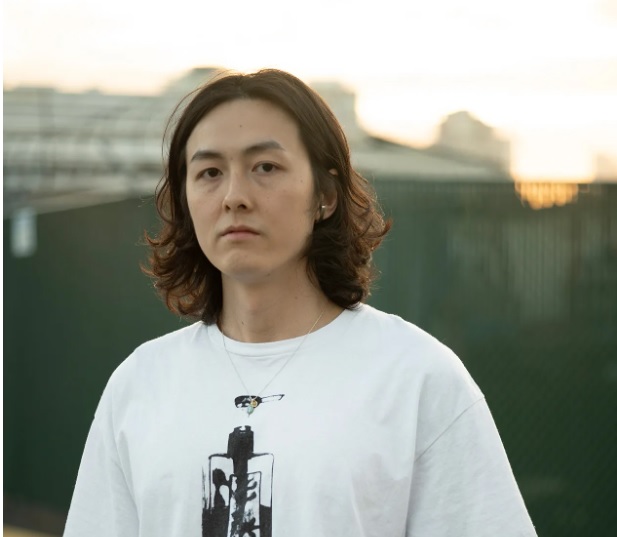
“I grew up in this country where identity has kind of been shifted into a singular entity where, you know, I’m Asian American. But no one really says Taiwanese American or Chinese American. It’s Asian American.”
— actor Hudson Yang
“Imagine how crazy family reunions were because my grandfather would speak to my dad in Hokkien. My dad would speak to my grandma in Hokchew. My grandmother would speak to my mom in Cantonese. I understood all of the dialects; I just couldn’t really speak any of them. And if we wanted to communicate as a group, we all had to speak in English, so it was definitely not that straightforward.”
— musician Eunice Keitan
“All of us have individuality in our identity, as well as our experience. So, you can be part of multiple communities as well as celebrate your individuality as a person.”
— baritone Luka Kawabata
“The word ‘Chinese’ is very similar to the word English. and I tell you why: because when you go to London, you know you’re speaking English. When you go to America, you’re speaking English; when you go to Canada, you’re speaking English; when you go to Australia, you’re speaking English.”
— Vancouver Metropolitan Orchestra music director Ken Hsieh

Follow Pancouver on Twitter @PancouverMedia and on Instagram @PancouverMedia. Follow Charlie Smith @charliesmithvcr.bsky.social.