Flamenco has a way of reaching into the soul. When it’s integrated with the pain of loss and yearnings for the homeland, this artform becomes all the more compelling. This was certainly the case with Flamenco de Formosa at the Vancouver Playhouse on Saturday (September 1).
That night, Vancouver TAIWANfest presented flamenco choreographer and Ballet Nacional de España member Hsueh Yu-Hsien and Genio Dance Group. Together, they told a story of Taiwan through Spanish dance with bold and bewitching performances. At one point, it brought some in the audience to tears before concluding with a rousing and lengthy standing ovation.
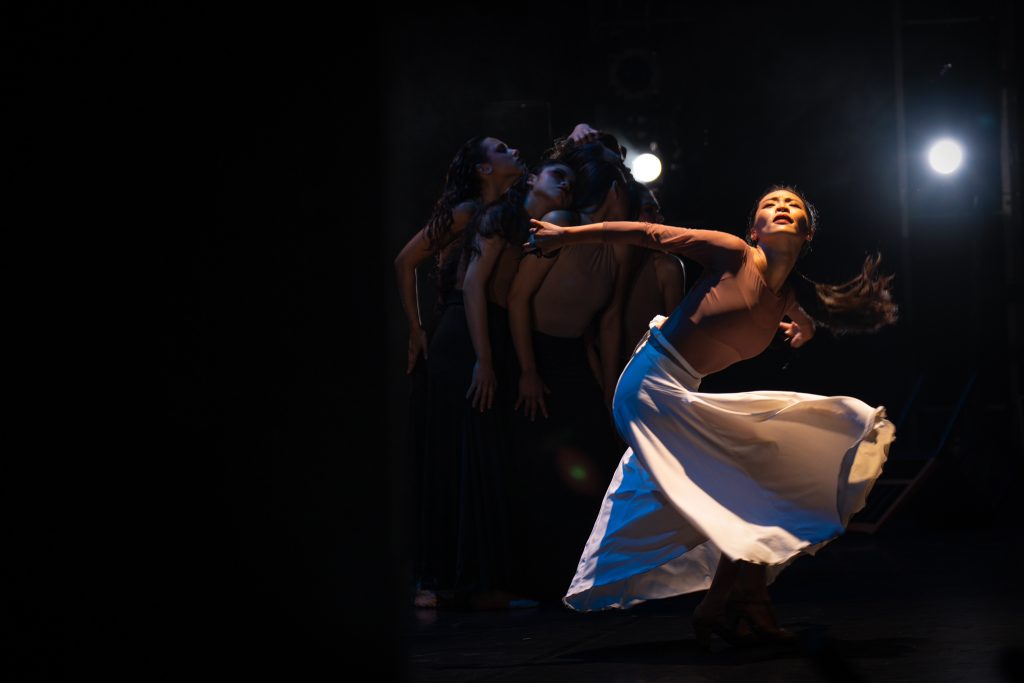
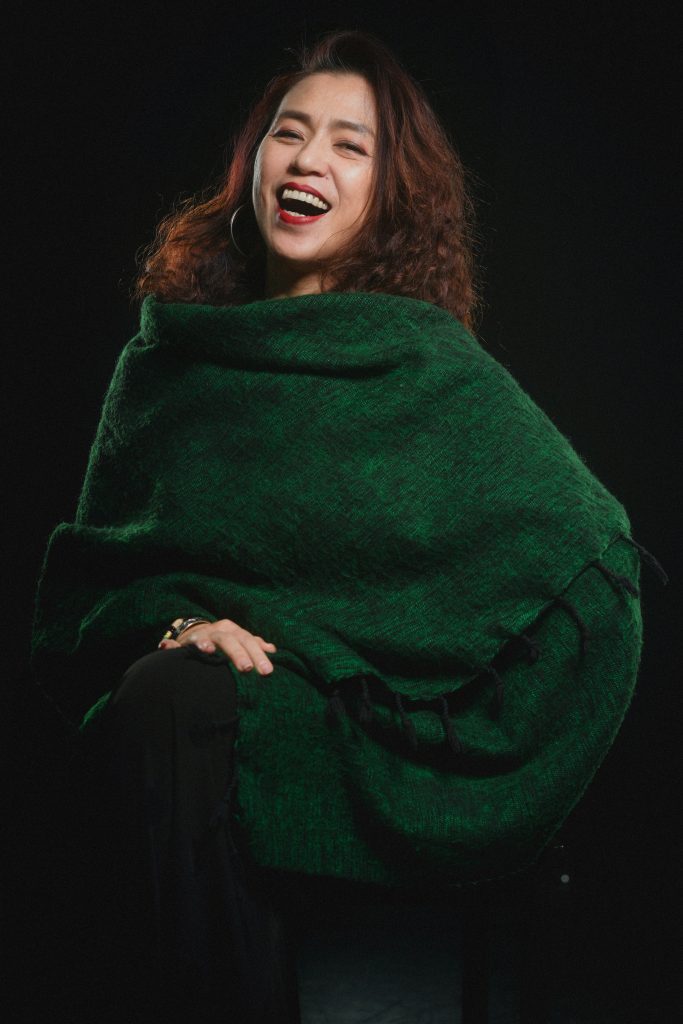
The sustained applause was due in part to Hsueh’s dazzling artistry. Her languid yet precise body, hand, leg, and arm movements were simply mesmerizing. At times, she glided across the entire stage, whereas on other occasions, her bursts of energy, combined with clapping and rapid-fire footwork, embodied lavish and untamed power.
For those in the audience, it was like experiencing a catharsis as she performed her award-winning solo, Risa y Olvido. Hsueh emerged in a yellow jacket, standing still in the spotlight at the back of the stage, facing away from the crowd. In this bulky garment, she demonstrated a series of undulating shoulder movements, hypnotic swaying of the arms, and elegant leg and footwork, along with the occasional classical ballet move. As the jacket slid off, she was left in a long black shirt and stockings, sometimes times prancing across the floor with the elegance and ferocity of a jungle cat to traditional Hakka music.
Showcasing flamenco from Spain
After Hsueh completed Risa y Olvido. I blurted out “Oh my God,” which probably surprised the person sitting in front of me. The title—Laughter and Oblivion in English—was adapted from a Milan Kundera novel, The Book of Laughter and Forgetting.
Hsueh’s mother, Ho Lian, choreographed the rest of the program. She founded the New Taipei City-based Genio Dance Group in 2000 before transforming it into a flamenco troupe in 2009. Since then, she and the other dancers have performed across Taiwan, including in remote Indigenous villages after natural disasters.
Their Vancouver premiere opened with Requiem, a gentle introductory piece. Ho, Hsueh, and the four Genio dancers— Tsai Pei Lin, Peng Ying Chung, Kuo Pin Yi, and Chen Jhen—emerged from the dark into the bright lights, reflecting the joy of the Spanish artform. Composer Vicente Amigo’s “Memorias de los sentidos” firmly anchored this part of the program in Spain.
This was reinforced by the Iberian Peninsula costumes, which the dancers wore through the first seven pieces. The four Genio members often wore bright, multi-coloured Spanish garments, working their shawls for maximum effect to well-choreographed works.
Hsueh, on the other hand, invariably appeared in solid colours, which focused the audience’s attention on her every move. When Hsueh stared straight into the crowd—as flamenco dancers often do—it felt as though her eyes were boring into your brain.
One of the more memorable pieces in the first part of the program was Ho’s “Farruca”, performed to Sergio Gomez’s “El Colorao”. Even though she founded Genio Dance more than 20 years ago, Ho still has the charisma and the flamenco chops to pull off a solo to maximum effect.
Setting the story in Taiwan
After the intermission, the story moved to Taiwan. This segment opened with Hsueh’s Risa y Olvido. That was followed by Green Island, which refers to a small chunk of land off the southeast coast. It was the site of a penal colony during the long period of martial law under Chiang family rule in the mid-20th century.
Some have claimed that prisoners wrote the popular Taiwanese song, “Green Island Serenade”, which was part of this piece. However, a professional musician maintains that he crafted it for a movie soundtrack, with “Green Island” referring to all Taiwan.
The costumes changed to Asian-styled tunics, which didn’t seem to hamper the dancers movements in any way. The entire group also performed to another popular Taiwanese song, “Moon Represents My Heart”.
But the saddest moment of the evening came when Burnaby violinist Tom Su walked on-stage to play “The Sound of Falling Rain”, which was made famous by Taiwanese singer Jody Chiang.
Some of the elders in the audience softly sang the words, which speak of loneliness and heartache over the loss of one’s mother. Others were simply weeping from this reminder from their homeland. And everyone heard the haunting voice of Ho’s father, who died two years ago, as they looked at family photos and letters on a big screen.
It was a powerful and memorable moment for those who’ve made new lives in Vancouver but who still pine over what they lost by leaving Taiwan.
Follow Pancouver on X (formerly Twitter) @PancouverMedia and on Instagram @PancouverMedia.