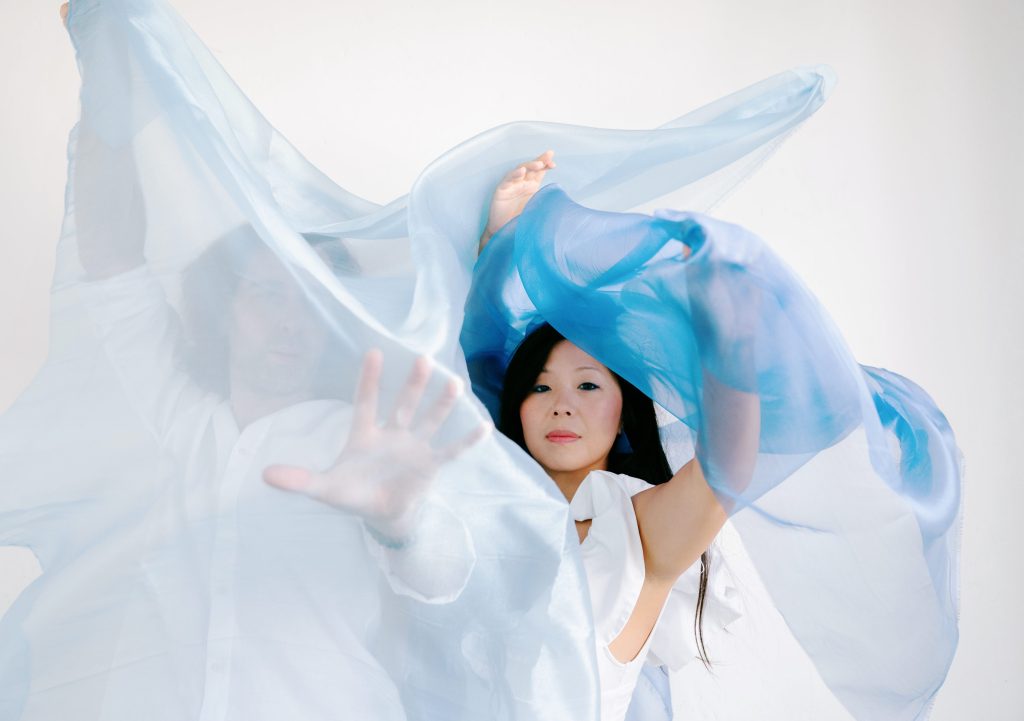
Flautist and bansurist Lara Wong used to wonder if she would occasionally secure gigs in Spain because of her ethnicity. The Vancouver-born flamenco musician’s parents are Chinese and Japanese Canadians. And there are very few flamenco musicians of Asian heritage in Madrid, where she’s currently living.
“Sometimes, you don’t know if they’re into you because you’re just like an exotic thing that plays something entertaining—’Like wow, a Chinese person playing flamenco,’ ” Wong tells Pancouver over Zoom.
However, those impressions faded in 2021 when Wong won a prestigious honour: the Filon first prize for best flamenco instrumentalist. It marked the first time in the 62-year history of the Festival Cante de las Minas that a non-Spaniard had won this award.
“So, the award definitely helped me take away those doubts,” Wong says.
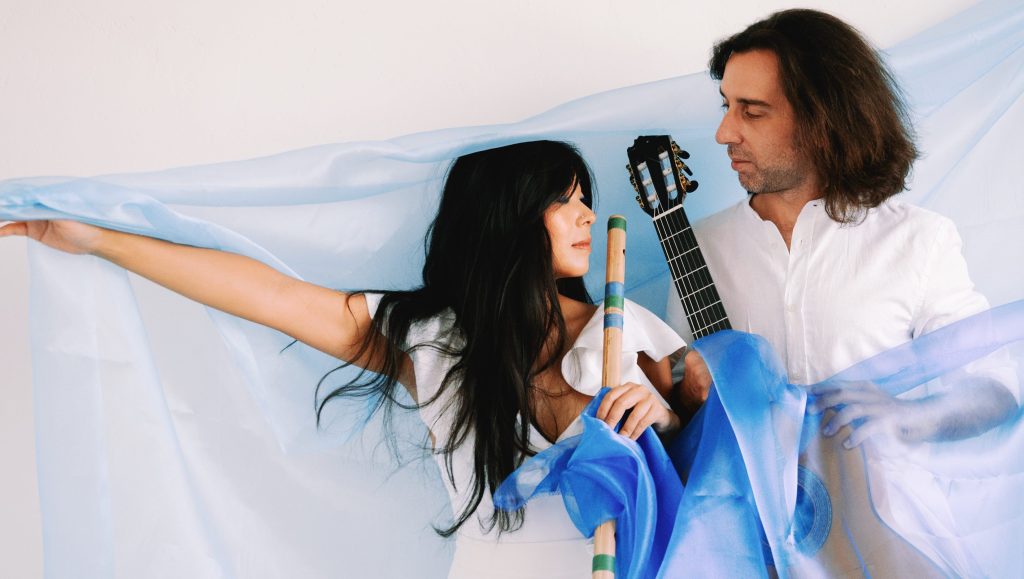
Next Friday (September 20), the Vancouver International Flamenco Festival will present Wong and flamenco guitarist Melón Jiménez at the Waterfront Theatre on Granville Island. They will offer a preview of their upcoming album, Confluencias, along with flamenco dancer Deborah La Caramelita and percussionist Davide Sampaolo.
“It’s definitely not what you would expect from a stereotypical or traditional flamenco music,” Wong says. “We really like all types of music, so it’s mixed with so many different influences.”
For example, the album includes none of the singing and very little of the hand-clapping normally associated with flamenco music. However, Confluencias has plenty of flute and guitar, along with electronic elements and the bansuri—an ancient, side-blown wooden flute from India.
“Some of our music is inspired by Indian sounds,” Wong continues. “And also, the bansuri is a very, very versatile instrument that sounds like many other folk flutes.”
Wong breaks boundaries
Many of the songs on Confluencias were written over the past two or three years. Wong reveals that she often writes melodies and Jiménez then transforms the song into something that she could have never imagined.
It’s a marked departure from her debut solo album, Rosa de los Vientos, which also featured Jiménez’s musicianship.
“I guess the biggest difference is the electronic music,” Wong notes. “And it’s less traditional. My first album kind of played more on traditional flamenco. This is definitely more world music.”
The Vancouver event will come after performances on Galiano Island (September 14) and Salt Spring Island (September 15). Wong and Jiménez’s Canadian tour also includes Ontario stops in London (September 28), Waterloo (October 2), and Toronto (October 6), and Ottawa (October 10). They have an additional date in Montreal (October 9), where Wong earned a degree in jazz and classical flute at McGill University. Moreover, they performed at TAIWANfest Toronto in August.
Wong knows that she’s breaking boundaries with her career. Her dad was from Hong Kong and her mom is from Japan, yet the multilingual Wong plays an Indian instrument as a flamenco musician in Spain.
Wong says that a bansuri was actually in her closet for about 10 years. She only picked it up at the urging of La Caramelita, whose roots go back to India and Malaysia. La Caramelita wanted to incorporate Indian dance with flamenco and needed someone to play the bansuri. Nowadays, Wong plays this instrument with a well-known tabla percussionist in Spain.
Loving flamenco since childhood
According to Wong, bansuris come in many sizes, so they are not diatonic instruments.
“With them, you need a different one for each scale,” she explains. “So, the big one sounds totally different from the small one.”
Whereas a smaller bansuri comes across as very bright and happy, a much larger version emits a powerful, booming sound. This versatility enables Wong to make it sound Japanese or Celtic, to cite two examples.
“I love Moroccan music,” she adds, “and it also sounds like a Moroccan flute, depending on the bansuri.”
Her love of flamenco goes back to her childhood. Wong recalls that she was 10 years old, her piano teacher gave her something by Spanish classical composer Enrique Granados. It was rhythmic, raw, and full of sadness.
“I just fell in love with that piece,” she says. “He said, ‘Oh, this has a lot of flamenco influences.’ ”
Moreover, it was dramatic, unlike the chirpy sounds of the flute in western orchestral music. With flamenco, Wong feels like she can express 100 percent of herself in a totally natural way.
“That’s what I most love about it—I guess the excitement and dramaticism,” Wong declares.
Watch Lara Wong’s interview with Pancouver editor Charlie Smith.
Supportive parents
Nowadays, she lives in the Chinatown district of Madrid, which has a growing Asian population. According to Wong, many of the newcomers don’t speak Spanish.
“There’s a lot more racism and ignorance in Spain,” Wong says. “Luckily, there hasn’t been anything really terrible that’s happened to me. It’s just like the little comments all the time.”
She speaks Spanish, Japanese, and Mandarin in addition to English and some French. Sometimes, people will express surprise to her that she’s a professional musician, given her Chinese heritage.
“I always get these comments, even from Chinese people—’Oh, your parents are Chinese, but they let you be a musician. What do your parents think about that?’ ”
In fact, Wong’s mother is Japanese. And she loves music. Meanwhile, her father is from Hong Kong and likes to work with film. Her paternal grandmother was a painter and her paternal grandfather was a writer.
“I was lucky to not grow up in that so-called typical environment where they want you to get a job that’s money-making and all that,” Wong states. “My parents are very supportive and they were always supportive.”
She has relatives in Hong Kong, China, and Taiwan. In light of this, she finds it “confusing” when people are referred to as “Chinese”.
“I kind of consider Chinese people as anyone who speaks Cantonese or Mandarin,” she says, before adding “or any other language linked to China”.
Every once in a while, a person will tell her that they can detect Japanese or Chinese influences in her flamenco music. She questions this, even though she loves Japanese music, including the folk sounds from Okinawa.
“I also take techniques from the Japanese Shakuhachi flute and I use that on the bansuri and the regular flute,” Wong acknowledges. “So, I mean there are little things.”
The Vancouver International Flamenco Festival presents Lara Wong and guitarist Melón Jiménez at 8 p.m. next Friday (September 20) at the Waterfront Theatre on Granville Island. For tickets and more information, visit the festival website. Follow Pancouver on X (formerly Twitter) @PancouverMedia and on Instagram @PancouverMedia.
This article is part of “Beyond Chinese”, a joint initiative of Pancouver and the Asian-Canadian Special Events Association. Through interviews with artists and cultural workers, Beyond Chinese offers a nuanced view of people with Chinese ancestry. Pancouver and the Asian-Canadian Special Events Association gratefully acknowledge the support of Canadian Heritage.