

Hudson Yang faced daunting challenges when he was cast for a leading role in a U.S. sitcom at the age of 11. He had never acted before when he took on the role of Eddie Huang in Fresh Off the Boat. The real Eddie Huang, a restaurateur and food personality, wrote an autobiography with the same title about growing up in the U.S. as the son of Taiwanese immigrants.
Despite his lack of TV experience, Yang still had lots going for him. He was loaded with charisma. His parents were successful Taiwanese immigrants to the United States. And his dad, Jeff, had written extensively about the underrepresentation of Asian Americans as an author and Wall Street Journal columnist.
The TV series adaptation of Huang’s memoir succeeded magnificently. Fresh Off the Boat was set in Orlando, Florida in the 1990s. It ran from 2015 to 2020, becoming the first show with an all-Asian American main cast to hit the 100-episode mark. It made Yang and fellow cast members Randall Park and Constance Wu big stars in North America and helped normalize the portrayal of Asian Americans on U.S. network television.
Yang, now 21 years old, is a Harvard University undergraduate student in psychology. He’s also this year’s Brand Ambassador for the 28th annual Vancouver Asian Film Festival, which continues until November 17. In an interview with Pancouver over Zoom, Yang shared his thoughts on Asian representation in film and TV, what he learned from his parents, and his Taiwanese heritage.
So, what was his most meaningful acting role?
“There’s only one choice here, honestly,” Yang replies. “The most obvious choice is Fresh Off the Boat—Eddie Huang.”

Yang branches out into drama and cooking
Yang has acted in several other TV and movie projects, including a comical cameo in Extremely Unique Dynamic. Ivan Leung and Harrison Xu’s comedy opened this year’s Vancouver Asian Film Festival.
Yang adds that his role in the 2023 film Honor Student was also very meaningful because it allowed him to step out of constraints imposed on him as a child actor.
“It was a very difficult role for me to actually play because I had to play a school shooter and I had to kill,” Yang adds. “I had to find this depth of emotion that I really haven’t had to find in Fresh Off the Boat. So that would have to be the most challenging. And it kind of reinvigorated my spark for acting.”
Yang decided to appear in Extremely Unique Dynamic because he’s friends with Leung and Xu, who also co-star. They pitched it to him as improv, which meant that could come on-set and do whatever he liked in front of the camera.
“I hopped on literally for one day and we filmed it,” Yang says. “It turned out hilarious. I can’t complain.”
Xu told Pancouver last month that Extremely Unique Dynamic is “an Asian meta, queer, coming-of-age, stoner, bromantic comedy”. But it also carries penetrating insights into the evolving representation of Asian Americans in TV and film roles.
It’s a topic that really interests Yang, who helped shatter stereotypes along with the other cast members on Fresh Off the Boat. He points to the 1994-95 sitcom All-American Girl, starring Margaret Cho, as the first important step along the way toward normalizing Asian American faces in entertainment. That was followed by a long drought on network TV, interrupted two decades later by Fresh Off the Boat.
Watch a trailer for Order Up with Hudson Yang.
Cooking up a storm
While there are far more Asian American faces in film and TV nowadays, Yang feels that they’re still underrepresented.
“We’re not at the end, but we’re making big strides every day toward creating more spaces for Asian Americans to not only be actors, but be creators,” he states. “The most important part is we’re now able to tell our stories without having gatekeepers blocking us, specifically because we’re Asian.”
Yang’s latest project is a cooking show called Order Up with Hudson Yang (known as Crash Course Cuisine in the United States). He’s hoping to do a second season, which will focus on unique cuisines in Canada before travelling to film more episodes in China and Taiwan.
Yang confesses to feeling a little shocked when he was invited to become the brand ambassador for this year’s Vancouver Asian Film Festival because he’s not Canadian.
“It’s small but mighty,’ Yang says. “There is a lot of power behind VAFF and it was really just an incredible honour to be part of this organization to help showcase more Asian American talents and more talents in general. They’re always so sweet to me, so I couldn’t say no.”
Yang credits his father for educating him about morals, beliefs, and how to become a proper man. His dad was also his first acting coach.
“Whenever I did auditions, he would be the person I would read with,” Yang reveals. “He would give me notes—and I hated them! I was, like, ‘You’re not an actor, Dad.’ But he did teach me a lot.”

Yang credits mom for giving him strength
Yang’s on-screen father, Randall Park, was another great mentor. Park is also known for playing President Kim in the 2014 Seth Rogan-Evan Goldberg comedy The Interview.
“How amazing of a man he is—in both talent and generosity and kindness,” Yang says.
Yang is also grateful for how hard his mother, Heather Ying, worked to ensure that he could succeed as a child actor. She worked night shifts so she could take Yang to the set during the day. These were often stressful times for a boy and she helped buck up his resilience.
“She really taught me strength and fortitude,” he says. “Without her, I don’t know if I would make it through as many years as I did—and even make it to the school and study as hard as I do now.”
His mom wasn’t gung-ho on his acting career. Rather, she was willing to help if this is what truly made Yang happy.
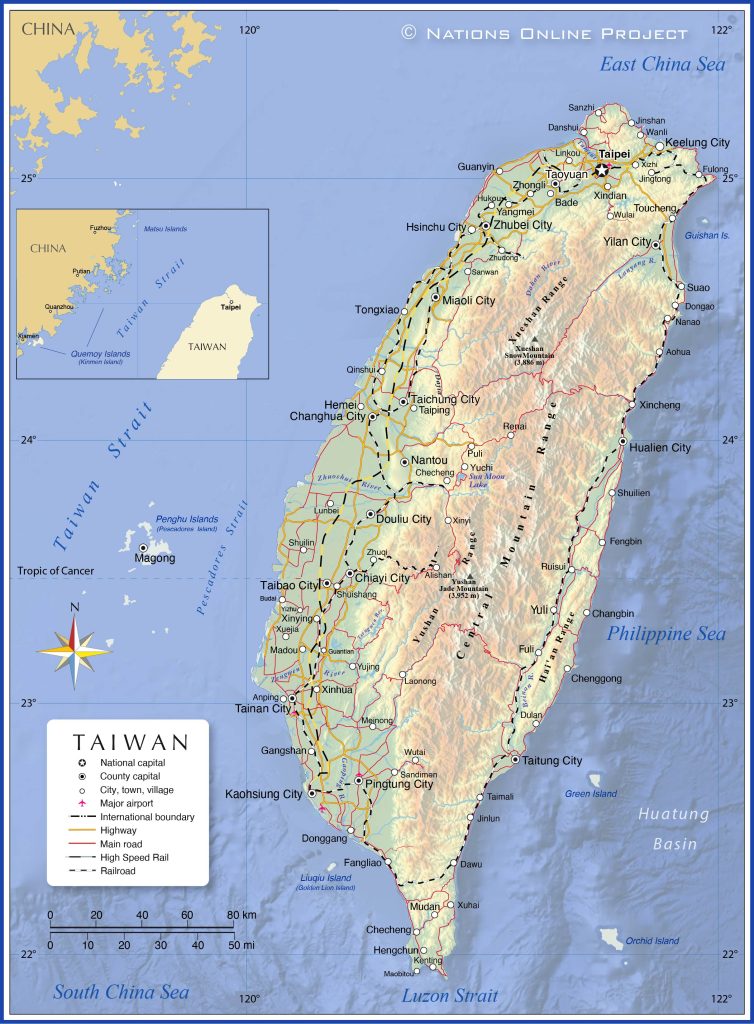
His parents’ country of birth, Taiwan, had a difficult history prior to becoming a democracy in the 1990s. Since the 17th century, it has experienced waves of colonization from the Spanish, Dutch, Ming and Qing dynasties, and Japan. After 50 years of Japanese rule, the island reverted back to China after the Second World War. At the time, China was in the throes of civil war and in 1947, Chinese dictator Chiang Kai-shek imposed martial law on the island. Two years later after losing the civil war, Chiang’s republican government moved to the island with millions of supporters, imposing their will on the local population.
History forges a Taiwanese identity
Pancouver asks Yang what impact this history and the rise of a distinct Taiwanese identity have had on the person he has become.
“That’s a tough question, definitely a tough question,” he replies.
He recognizes that people in many countries are always afraid of losing their identity.
“Also, I grew up in this country where identity has kind of been shifted into a singular entity where, you know, I’m Asian American,” Yang notes. “But no one really says Taiwanese American or Chinese American. It’s Asian American.”
Moreover, his father has been very vocal on the importance of identity and culture in Asian American spaces. And Yang himself has looked into Taiwanese history. This dates back to when it was called “Formosa”, which means beautiful island in Portuguese.
“I’ve learned so much about how beautiful and amazing Taiwan is as a country and how prideful and intelligent and powerful we are as Asians—as Taiwanese,” Yang continues. “Thankfully, maybe unlike a lot of other people, I have been blessed with the knowledge of how amazing my country is and how amazing it will continue to be.”
Watch Pancouver editor Charlie Smith’s interview with Hudson Yang (above).
Where to go from here?
This raises another question: why are North Americans so unaware of Taiwan’s successes? This is true in whether it’s curbing greenhouse gas emissions while still growing the economy or in being the first Asian country to legalize same-sex marriage.
“For Americans, it’s difficult to find a single pinpoint—a single place—to blame,” Yang responds.
He then mentions the U.S. education system’s failure to enlighten students on the “brilliant, beautiful histories” of countries around the world, and specifically in Asia. Next, Yang brings up the stigma associated with trade wars and military conflicts.
He also cites the battle for economic supremacy between America and China as another factor undermining understanding of the beauty and depth of Asian cultures. But he also believes that advances in technology and the popularity of social media can help the next generation gain greater insights.
“We have made large strides to understanding not only Taiwanese, but global culture to a depth that hasn’t really been seen in a while,” Yang declares. “And I’m hoping it continues even though a lot of our public culture has become kind of like…brain-rotting and simple and shallow.”
The Vancouver Asian Film Festival continues until November 17. At 2 p.m. on Saturday (November 9), the festival will host a fireside chat with Hudson Yang at the Vancouver Film School. Tickets are available on the VAFF website. At 9 p.m. on Saturday, the festival will host its Centrepiece After Party at Glowbal Restaurant (590 West Georgia Street). Tickets are $35 and include complimentary hors d’oeuvres and a cash bar.


