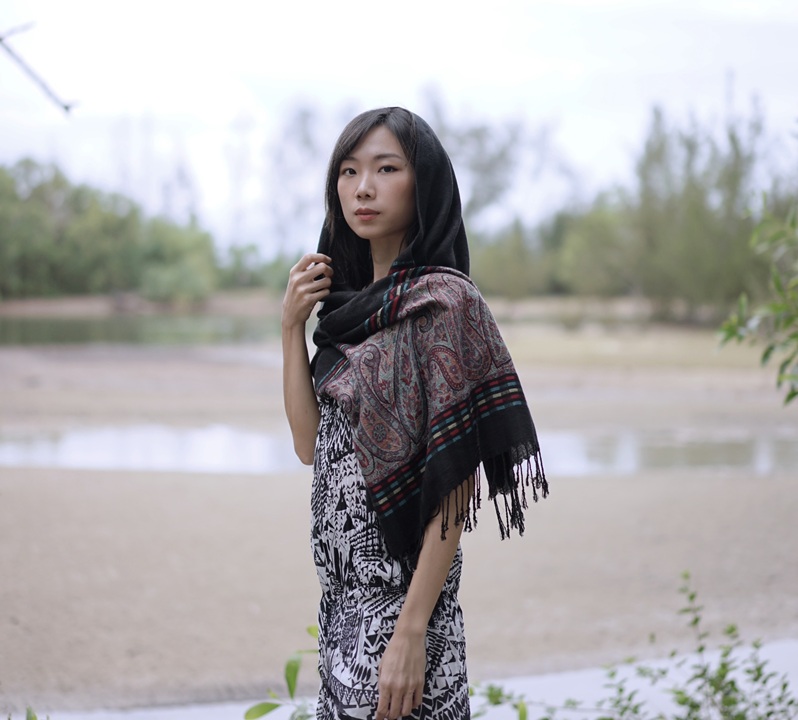
Vancouver writer Ban Zhang was born in Shanghai and has been living in Vancouver for almost 25 years. Since immigrating, he has volunteered a great deal of his time helping other Chinese immigrants adjust to Canada. In addition, Zhang has contributed articles to Voices & Bridges, Pancouver, the Georgia Straight, and other publications.
Zhang’s newest book is Going to the Grouse Grind – Collected Essays. He wrote the first edition in Chinese and it’s available through the Harvard Book Store and other online bookstores. In an interview with Pancouver, Zhang shared some thoughts about his book and his philosophy on life as an immigrant from China.
Pancouver: Your new book of essays mentions the Grouse Grind in the title. As we both know, the Grouse Grind is a gruelling hiking trail in North Vancouver known as Nature’s Stairmaster. Can you tell us about the first time you walked up the Grouse Grind?
Ban Zhang: I got to know the Grouse Mountain almost as soon as I arrived in Vancouver 25 years ago. I was told that the Grouse Mountain is the peak of Vancouver. It amazed and attracted me.
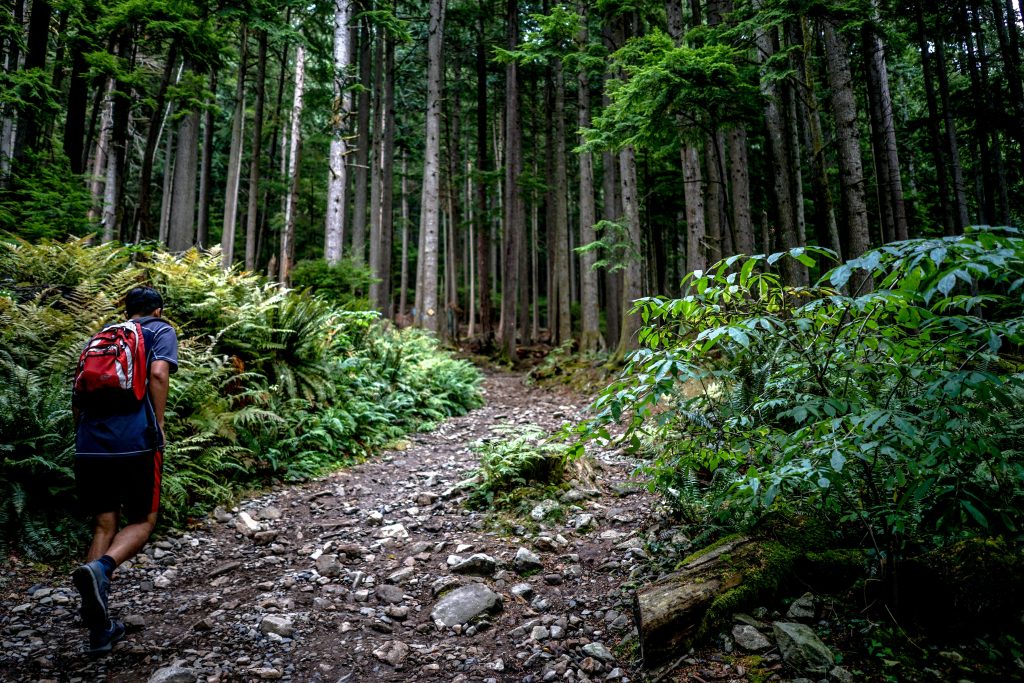
My first walk up the Grouse Grind took place in the second year of living in Vancouver. My son was still in Grade 2 or 3 at that time. I have a university classmate in Vancouver too. Two families— two couples and two kids—went together on a sunny summer weekend.
Ironically, the first walk up could not be called hiking but rather going to picnic. We brought water bottles and watermelon, salads and spring rolls. Walking on the Grind, we realized we were obviously unprepared—over-equipped with food but under-equipped with footwear. It was so heavy and we were so tired, but very happy. We ate watermelon on the way and carried watermelon rind to the top. It took us 2 hours and 45 minutes.
It was really a memorable experience, and it also taught us a hard lesson – getting ready before getting there.
Pancouver: Why did you feel it was important to write about the Grouse Grind in your book?
Ban Zhang: Traditionally, Chinese people admire mountains. Du Fu, a famous poet of Tang Dynasty, wrote in one of his poems, “Try to ascend the mountain’s crest, it dwarfs all peaks under our feet.” Su Shi, a great scholar of Song Dynasty, once wrote a famous line in a poem, “Why can’t I tell the true shape of Lushan? Because I myself am in the mountain.”
Mountain is the metaphor in many aspects in different cultures. In Chinese culture, it represents the beauty and power in the natural world. It represents the resistance and resilience in the human society. It also represents up-and-down and zigzag in our life, especially for many new immigrants to this country.
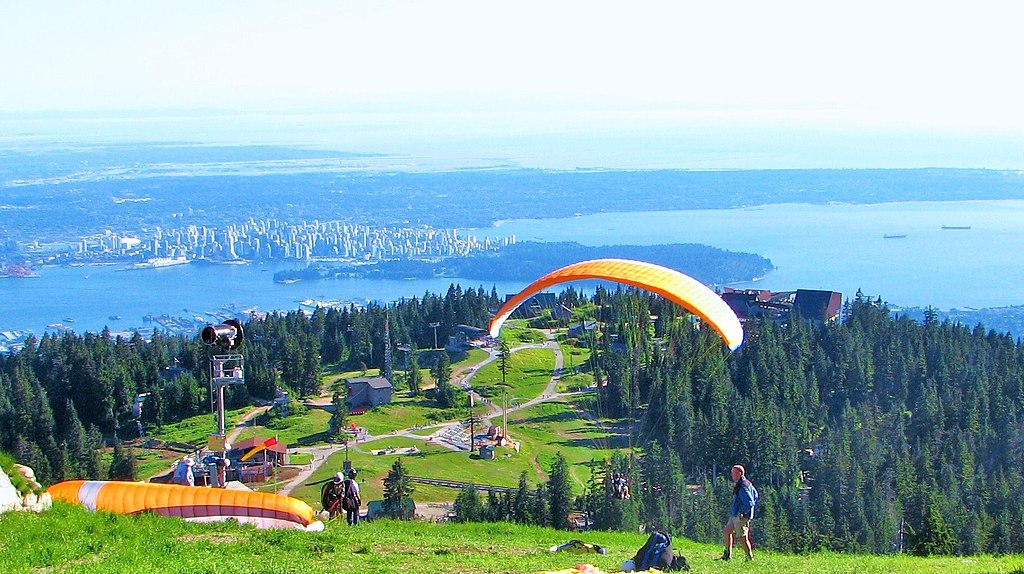
As for Grouse Mountain, in my view, it is an icon of Vancouver, because it is the peak of the city. An icon of a place is important for people to be proud of, just like Eiffel Tower for Paris, Statue of Liberty for New York, and the Great Wall for China. An icon enhances people’s sense of belonging and emotional attachment.
Grouse Mountain is also like a compass, because it is positioned at the north of Vancouver, signalling the direction for newcomers, who might get lost from time to time. In Vancouver, you find the mountain, you find the north and you know which direction you are going to go.
In my book, I write about the Grouse Grind, a steep hiking path up to the top of Grouse Mountain. But the real emphasis is on “Going to”, an action to embrace and conquer the challenges. So the title of the book is “Going to the Grouse Grind” to reflect metaphorically uneasiness of life of Chinese immigrants in Canada.
Pancouver: You were born and raised in Shanghai…is there anything like the Grouse Grind in that part of China?
Ban Zhang: Shanghai is my hometown by birth. Vancouver is my hometown by choice.
In Chinese writing, Shanghai consists of two characters, 上(Shang) meaning going, 海(Hai) meaning ocean. Combining the two characters together literally means going to the ocean and overseas. My book uses Going to the Grouse Grind as its title. I tried to mirror the actions in motion and imply the same challenge for people who cross the Pacific as those who climb the Grouse Grind.
Shanghai is quite different from Vancouver. The overall terrain of Shanghai is a broad and flat plain, which is part of the alluvial plain of the Yangtze River Delta, with an average altitude of about four metres. Mountain is pronounced as “Shan” in Chinese. Perhaps due to its lack of mountains, people in Shanghai feel an inspiration and appreciation for the mountains. There are many streets named after famous mountains in China, such as Huangshan Road, Tianshan Road, Laoshan Road, Taishan Road, Songshan Road, Huashan Road, and Hengshan Road, et cetera.
Pancouver: What is your objective with your new book?
Ban Zhang: My writing of this book is somewhat by accident. The book is a collection of 35 essays. Most of them were written in Chinese or English and published during the COVID-19 pandemic. During such an unprecedent period, I turned myself from working-from-home to writing-from-home. I wrote about what I was seeing, thinking, and sharing.
Putting these essays together in one book is intentional. As previous mentioned, mountains are often seen as the challenge. That is why many are saying that life is like climbing the mountain. It is more so for newcomers who made a choice of moving to Vancouver where it is quite different from their original home. I would say an immigrant’s life is like climbing the high mountain.
Despite the challenge, climbing to the top of Grouse Mountains is also like standing on the shoulder of a giant. One can look into the far distance, realizing that life is not just about surviving, but also about thriving.
To make it easier for Chinese readers who enjoy my writings, I re-organize my writings into four themes, “Up and Down the Mountains”, “Caught between Two Walls”, “Inside and Outside of Workplace”, and “Me and the Indigenous People”.
“Up and Down the Mountains” is to focus on images of dynamic and diverse Canadian society from various angles, looking up and down or zooming in and out.
The theme of “Caught between Two Walls” is a reflection of reality in Canada where the Chinese community faces invisible and intangible cultural walls, separating them from the rest of society.
“Inside and Outside of Workplace” is where I present experiences and examples of successful stories in career development, including some of my own and many others.
“Me and the Indigenous People” is a final theme in the book to emphasize some of the issues and stories that are important and interesting when it comes to the Indigenous people in Canada. I purposely included this theme is to raise the awareness of Indigenous community among our Chinese readers.
In the epilogue, I express my wish that Canada remains an inclusive society for all Canadians.
Pancouver: You were born in China but you have spent almost half of your life in Canada. How have you changed as a result of living in Canada?
Ban Zhang: “The only constant in life is change.” Many things have changed after over two decades of my life in Canada. The most significant change is about my identity and attachment, from being a Shanghainese to being a proud Canadian of Chinese heritage.
This means that I am grateful for Canada being such a welcoming and wanting society for people like me from all over the world. This means that I committed myself to the rights and responsibilities of being a Canadian, obeying the law, taking care of the family, voting in elections, helping others in the community, protecting and enjoying our shared heritage and environment, et cetera. This means that I take pride in my Chinese heritage, including its traditions, history, and cultural practices. This also means that I strongly disagree with and denounce perceptions and practices that treat Chinese Canadians differently from the rest of Canadians.
Pancouver: What are some of the traditions from Shanghai that remain with you in Canada?
Ban Zhang: Since 19th century, Shanghai has become a point where East meets West. Over the centuries, Shanghai has grown and transformed from a fishing village to an international metropolis, which attracted mass migrants from across China and the world. During the process, a Shanghainese culture emerged, denoting the mixture of traditional Jiangsu-Zhejiang-Shanghai culture with Western culture. In today’s language, I would call it “multiculture of Shanghai style”.
My father moved to Shanghai from Jiangsu province, and my mother’s family was originally from Zhejiang province. They met and married in Shanghai. Being born and growing up in such a multicultural environment, I found myself adapting more easily into Canada’s multicultural society after moving to Vancouver. In the meantime, I still speak Shanghainese at home and visit Shanghainese restaurants when I miss Shanghainese food. I go back to Shanghai regularly to visit families and friends and pay tribute to my ancestors.
Pancouver: Canadians sometimes think of China as a monolithic entity. But there are many languages and cultural traditions in such a large country. How would you describe the culture of Shanghai?
Ban Zhang: The culture of Shanghai is a “multiculture of Shanghai style” as I explained above. Despite its unique local dialect, Shanghainese always proudly say that they grew up by drinking the water of the Huangpu River. The Huangpu River to Shanghainese is like the Fraser River to British Columbians, and St. Lawrence River to Montrealers. It is part of the people’s and community’s identity.
There are so many rivers and lakes in China. People drink water of these rivers and lakes and shape and manifest their diverse traditions and identities.
Pancouver: How might that tradition and identity in Shanghai differ from those Beijing or Guangzhou?
Ban Zhang: In Chinese, people often use a nickname to characterize a city or location. For example, Shanghai is named 魔都 (Mo Du) denoting a place with magic. In fact, it comes from the transliteration of the English word “modern” to reflect the city is the most modernized in China. Beijing is named 帝都 (Di Du), because it has been a capital city for five dynasties or empires. People call Guangzhou 商都 (Shang Du) largely because it is the only commercial city in China that has never interrupted foreign trade for more than 2,000 years.
These nicknames tell people the features and characteristics of these regions that make each place and people of each place identical in one way or another.
Pancouver: We are calling this series “Beyond Chinese” because we want to go beyond stereotypes and labels. What are some false stereotypes about overseas Chinese people living in Canada?
Ban Zhang: There are many stereotypes or labels, most of time racist stereotypes, about Chinese Canadians. Historically, the stereotypes were based on race and behaviour, such as unassimilable, “Yellow Peril”, and as being unsanitary, scheming, and underhanded. One who didn’t speak English or French, didn’t watch hockey, and didn’t drink in bars was considered non-Canadian.
Later, stereotypes turned to their views and values. Some malicious and negative attitudes toward Chinese Canadians survive in characterizations of these Chinese Canadians as “foreigners” and “aliens” or “foreign agents” whose views and values are different from a so-called Canadian way of life.
The second theme of my book—“Caught between Two Walls”—particularly addresses this harsh reality in Canada where the Chinese community faces invisible and intangible walls, separating them from the rest of society.
Pancouver: What advice do you have for new Chinese immigrants to Canada?
Ban Zhang: As an English saying goes, ‘7 colors make a rainbow, 7 chords make music, 7 days make a week, and 7 continents make a world.’ In other words, every piece is special and makes a unique component of the whole.
Chinese Canadians, like any other groups, possess unique perspectives and experiences that contribute to the rich fabric of Canadian society. As early as the late 1800s, many Chinese workers came to Canada and risked and sacrificed their lives to help build the Canadian Pacific Railway, which became the spine of the physical infrastructure of Confederation. That’s why some historians made it clear that “there would be no CP railway without Chinese workers, and there would be no today’s Canada without CP railway.”
In addition to this contribution to the physical infrastructure, many individuals have emerged as beacons of social infrastructure change, inspiring others and challenging prevailing prejudices. Notably, figures like Douglas Jung, the first Chinese Canadian member of Parliament; Vivienne Poy, the first Canadian of Asian descent to be appointed to the Senate of Canada; and the Right Honourable Adrienne Clarkson, the first Chinese Canadian Governor General have shown the transformative potential of individual voices.
Today, every Chinese Canadian needs to continue these traditional contributions and make their collective voice louder.
Ban Zhang is the author of Going to the Grouse Grind – Collected Essays. The Chinese edition is available through the Harvard Book Store and other online booksellers. This article is part of “Beyond Chinese”, a joint initiative of Pancouver and the Asian-Canadian Special Events Association. Through interviews with artists and cultural workers, Beyond Chinese offers a nuanced view of people with Chinese ancestry.
Follow Pancouver on X @PancouverMedia and on Instagram @PancouverMedia. Follow Charlie Smith on Bluesky @charliesmithvcr.bsky.social.