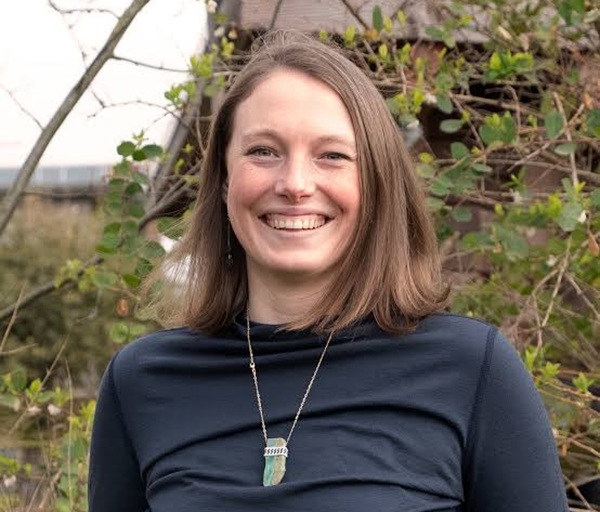
Long before he became a lawyer, businessman, and TV show host in Taiwan, Leo Seewald did something out of the ordinary. Even though he is not of East Asian ancestry, he enrolled in Chinese school as a 10-year-old in his hometown of Vancouver.
“I have to give my mom a lot of credit,” Seewald tells Pancouver over Zoom on a trip to Vancouver to visit his parents.
“In those days, no one was studying Chinese and it was incredibly hard to find a Chinese school,” he continues. “My mom spent hours and hours on the phone because I told her, ‘Mom, I want to learn Chinese.’ ”
He attended night school once a week in the Point Grey neighbourhood to study Cantonese. His classmates were learning the language so that they could speak to their grandparents, most of whom came from Hong Kong. Seewald wanted to understand this dialect because his dad worked with lots of Chinese people and his family often went out to eat Chinese food.
Several decades later, Seewald is a Taiwanese citizen living in Tianmu in the Shilin District of Taipei. He’s also the host of Happy Fisherman, a TaiwanPlus TV series in its third season.
On his show, Seewald transitions effortlessly between English and Mandarin as he visits fishing harbours and interviews people who earn their livelihoods in this industry. He also heads out to sea with fishermen, speaking Mandarin with them, to show how they do their work.
“I think when you speak to people in their own language, it always makes them happy,” Seewald says.
Watch an episode of Happy Fisherman.
Seewald shares fishermen’s stories
He points out that there are more than 230 fishing harbours in Taiwan. Along with his co-producer, Peter Chang, Seewald hopes to visit and document all of them.
“I thought to myself: ‘I bet no fisherman has ever been to all these harbours because they’re busy making money,’ ” Seewald notes.
Moreover, many men who go out on the boats are in their 50s, 60s, and 70s. According to Seewald, fewer young people are interested in this as a career.
“I felt there’s a story to be told by some of these old fishermen—that’s worth telling—before people forget,” he says. “I also think a lot of people in Taiwan or around the world don’t know how the fish they eat are caught.”
How Seewald is even able to host the show is a story in itself. He’s owned a 40-foot Bavaria yacht for almost 15 years. He frequently took family members up and down the Keelung and Danshui rivers on his boat as he was working first for Manulife and later for BlackRock in Taiwan.
His vessel is called Four Dollar, which translates into Mandarin as “bottoms up”—i.e., finishing an alcoholic beverage in a glass. The name of the boat elicits a chuckle from his Taiwanese friends.
Even though Taiwan is the world’s fifth largest yacht producer in the world, there’s not much of a yachting culture. These ships are built for export. In the early days on the rivers, Seewald often saw no other boats.
“Most of the fishing harbours are closed to yachts,” Seewald says. “You cannot even refuel a gasoline-powered yacht. You have to use jerry cans because there are no gas stations like you have in Coal Harbour [in Vancouver].”

Seewald becomes Taiwanese citizen
Because of bureaucratic regulations, Seewald needed to overcome a few obstacles before he could pursue his dream of visiting all the fishing harbours.
“You have to apply to go into all the harbours if you want to go,” he says. “Sometimes, they give you permission and sometimes they don’t.”
In the first episode of Happy Fisherman, Seewald goes shopping for his own fishing boat. This is required in order to obtain a fishing licence. He could only do this as a Taiwanese citizen.
However, due to government rules, his kids aren’t allowed to travel with him on his fishing boat; they can only accompany him on his yacht.
“I had the pleasure of becoming Taiwanese in 2019 under the category of ‘special contribution to Taiwan’ when I was in the financial Industry,” Seewald reveals. “I did some things to help modernize the legislation—I was the past chairman of the American Chamber of Commerce [in Taiwan].”
He also founded the Canadian Chamber of Commerce in Taiwan, converting an existing Canadian society on the island into a business organization. Seewald then shows a photograph from his phone of him holding up his citizenship certificate. Standing beside him is the former president, Tsai Ing-wen.
He’s actually met the former president on several occasions. Seewald still chairs a renewable-energy company owned by BlackRock. In that capacity, he has continued coming in contact with other high-ranking officials, including current president Lai Ching-te and Taiwan People’s Party chairman Ko Wen-je.
But it’s clear that fishing remains one of Seewald’s foremost passions. He loves telling stories about his travels around the island nation, which is slightly larger than Vancouver Island.
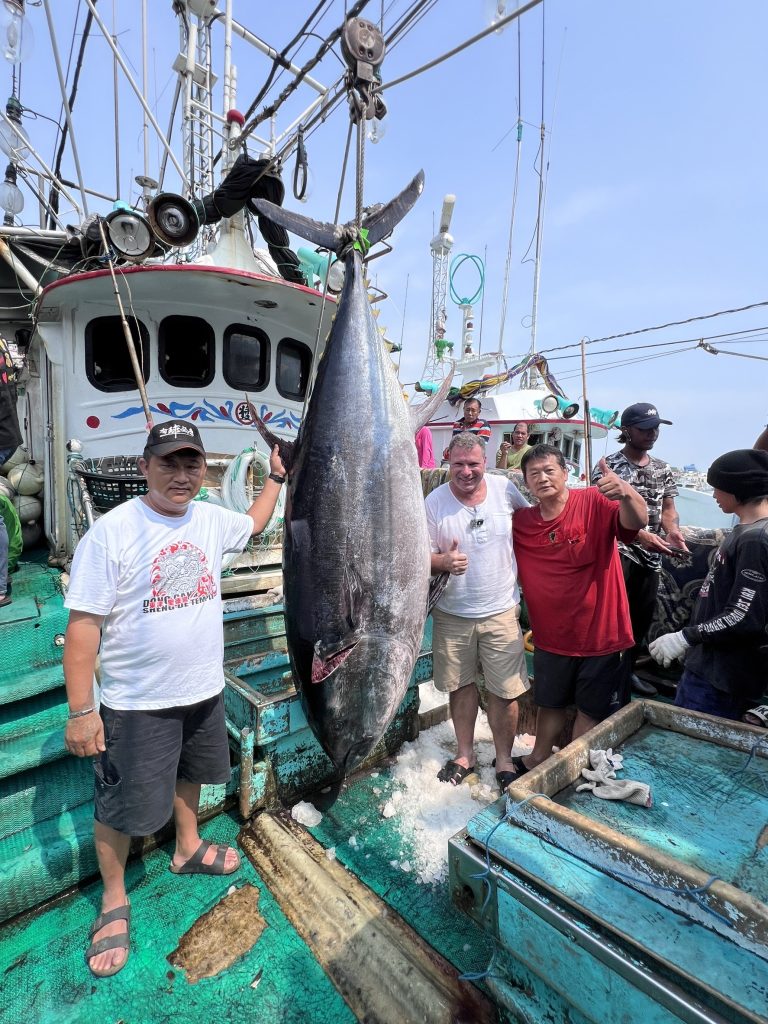
Tuna sells for more than US$100,000
For example, he mentions the extremely busy Donnggang Harbour near the city of Kaohsiung. This fishing community is famous for “three treasures”: tuna, Sakura shrimp, and oilfish roe. When the first tuna is brought on-shore every year, it’s a major media event, which he witnessed.
“It was caught by my friend,” Seewald relates. “That tuna was 300 kilos and it sold for over US$100,000 [3 million New Taiwan dollars].”
Through Happy Fisherman, he’s come to admire the work ethic and resourcefulness of people who make their living from the sea. It’s not a 9 to 5 job—when the fish are present, the fishing boats set out to find them, regardless of the weather.
“It’s extremely tiring, difficult, hard work that is also very dangerous,” Seewald says. “I learned to respect the fishermen more than I ever have by just going out with them, and having been in some rough seas with them.”
He recalls spending several hours with Taiwanese fishermen laying out five nautical miles of nets in pursuit of Spanish mackerels. In the end, they only caught four.
Yet he points out that Taiwan has bountiful supplies of fish, thanks to the Kuroshio Current. Similar to the Gulf Stream in the North Atlantic, it moves warmer water north up the side of Taiwan.
“That brings a lot of migratory fish—the flying fish—which, in turn, brings the tuna and the sailfish,” Seewald explains. “So, we have such a diverse ecosystem of fish there because of this current.”
This year, he filmed a program about Indigenous fishermen on Orchid Island during flying-fish season.
“In most cases, they don’t fish in huge commercial fishing boats,” he says. “We do see traditional canoes being used sometimes.”
Seewald admires Taiwanese people
In the future, Seewald hopes to interview fishermen on the Matsu and Kinmen islands which are close to the coast of China’s Fujian province. He has applied for permission from the Taiwanese government.
“I hope in the next few months that I will be able to go there.”
Happy Fisherman is not scripted. Rather, he prefers meeting people in the fishing harbours and asking if they would like to speak on-camera. Seewald says that about 99 percent are eager to share their stories.
“The Taiwanese people are so friendly, so warm,” he declares. “If you go there, it’s like no other place. I’ve done lots of stories of how the people just go out of their way to help you. And it’s just a fantastic place to live.”
So how did a Canadian kid from Vancouver become a TV celebrity on the opposite side of the Pacific Ocean? First of all, he became educated, studying business at the University of British Columbia and Simon Fraser University. Then it was off to the University of Alberta for law school, followed by an articling position at a downtown Vancouver law firm. After completing his articles, Seewald worked as an associate before applying to law firms in Hong Kong.
“I knew that I eventually wanted to work in Asia,” he says.
Goodman Phillips & Vineberg hired him to work as a lawyer in its Hong Kong. Seewald loved living in the city, thinking he would be there for the rest of his life. But he also wanted to run a business. That led to new job in 2006 doing legal compliance for Manulife.

Tall mountain peaks and deep ocean floors
Manulife offered him him the choice of moving to Indonesia or Taiwan. He chose the latter, becoming deputy general manager of its insurance company and chairman of its asset management company in Taiwan.
“True to their word, Manulife eventually let me run a business,” Seewald says.
With his Cantonese, Seewald didn’t find it too difficult learning Mandarin, which is spoke in Taiwan. Then in 2013, the world’s largest asset manager, BlackRock, hired him to oversee its operations in the country. Seewald remained in that position for six years.
Like many Taiwanese citizens, Seewald is concerned about sabre-rattling from Beijing, which claims that the island nation is a province of the People’s Republic of China. This is in spite of Taiwan having its own elected president and national legislature, currency, constitution, armed forces, and flag.
“I hope a peaceful resolution can be found,” Seewald states. “I think that’s the most important thing—that we can find some way to avoid war. When you look at other parts of the world—Ukraine and Israel—it’s so terrible for the people. And I think a lot of people forget that.”
He likens choosing a new country to changing one’s religion. He’s in Taiwan because he chose to live there and not simply because he was born on the island.
“It’s an amazing country,” Seewald insists. “What people don’t realize is that we have the highest mountains in northeast Asia. Our Jade Mountain is higher than Mount Fuji in Japan.
“The ocean topography is the same,” he adds. “If you go slightly off the east coast, within two kilometres offshore, it drops down to 1,000 metres. And within a few kilometres, over 3,000 or 4,000 metres deep as you approach the Marianas Trench… It’s incredible.”
Follow Pancouver on X @PancouverMedia and on Instagram @PancouverMedia.