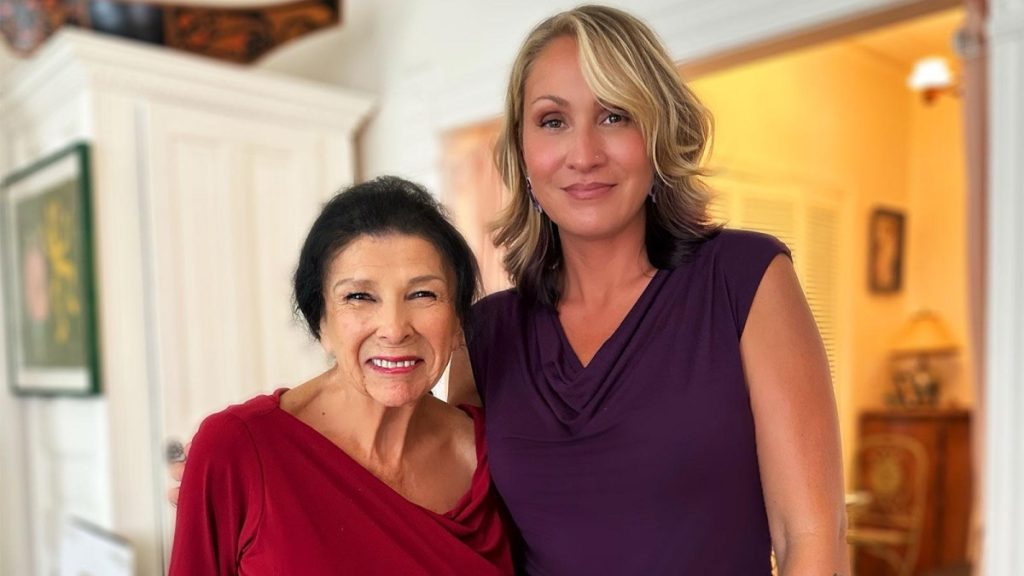
Vancouver filmmaker Jules Arita Koostachin describes Alanis Obomsawin as the “Indigenous matriarch” of documentary filmmaking in Canada. The 92-year-old Obomsawin has completed 57 films over the years. These works include the landmark Kanehsatake: 270 Years of Resistance, which was released by the National Film Board of Canada in 1993.
In a phone interview with Pancouver, Koostachin praises Obomsawin for “truth speaking”, as well as for her political and sociological approach to filmmaking.
“Also, she replaced the white didactic voice—the male voice—with an Indigenous woman,” says Koostachin, a member of the Attawapiskat First Nation. “So, for me, that was a big game changer.”
Koostachin’s remarkable TELUS original film, NiiMisSak: Sisters in Film, focuses on how Obomsawin and other Indigenous women filmmakers are changing perceptions of Indigeneity through storytelling. GEMFest 2025 will present Koostachin’s feature-length documentary at 8:30 p.m. on Thursday (March 6) at the VIFF Centre.
“I really wanted to provide an opportunity for dialogue for women in film at all different stages…with Alanis kind of leading the way in terms of creating a pathway for us all,” Koostachin states.
In addition to Koostachin, NiiMisSak shares the voices and filming philosophies of six other B.C. Indigenous women filmmakers at various stages in their careers. One of them is Marie Clements, director of Bones of Crows, Red Snow, and The Road Forward. Others include Asia Youngman, Kaya George, Jessie Anthony, Tristin Greyeyes, and Kira Doxtator.
“With the rest of us, the big thing that came out of NiiMisSak was the need to self-produce,” Koostachin maintains. “There is still a bit of resistance to Indigenous storytelling.”
Watch the trailer (above) for NiiMisSak.
NiiMisSak showcases Koostachin’s methodology
In the film, Koostachin says that there are some folks who “just don’t think we’re qualified or have enough experience, even though we do”. Speaking to Pancouver, she declares that this resistance is also linked to people feeling uncomfortable with content that calls out colonialism.
“With self-producing, we are the authority in the storytelling practice,” she adds. “It’s our methodology. It’s our way of telling stories. In order to do that, you have to be in a key creative role as producer, writer, director—right?”
In the 1970s, Koostachin grew up seeing documentaries about Indigenous people made by white, male directors. According to her, these films looked at the past through a colonial lens. In contrast, Obomsawin chose to address present-day issues, such as the Oka crisis in Kanehsatake: 270 Years of Resistance.
“I think that is what made her work enticing,” Koostachin says. “With NiiMisSak, I feel like I’m doing the same kind of thing. These are issues that Indigenous women in film are dealing with in the here and now.”
Moreover, Obomsawin amplified voices of Indigenous people telling their own stories. Koostachin has adopted a similar approach in NiiMisSak and her other films, including the 2023 documentary WaaPaKe (Tomorrow). Focusing on the fallout from Canada’s residential school system, WaaPaKe (Tomorrow) won the Best BC Film award at the Vancouver International Film Festival.
“I’m a trained counsellor, so I have been working with Indigenous communities for decades,” Koostachin says. “I feel that’s translated well into documentary film.”
In fact, she suggests that her interviewing skills, sharpened through years of counselling, is her “superpower” as a filmmaker. This was on display in WaaPaKe (Tomorrow), in which she interviewed her mother—a residential school survivor—as well as descendants of survivors to offer deep insights into intergenerational trauma.
“I had a friend once say, ‘If you watch WaaPaKe, it doesn’t matter if you speak English or not; you’ll understand the crux of the story,’ ” Koostachin says. “For me, that was the biggest compliment.”
Academic work informs filmmaking
In 2021, Koostachin earned a PhD. at UBC’s Institute of Gender, Race, Sexuality and Social Justice) after writing a 207-page thesis dissertation about Indigenous documentary protocols and processes.
“I employed systems of knowledge of my Ancestral lands to develop a theory to contribute to the study of visual sovereignty, the protection and protocols when working with Indigenous study,” she writes in the abstract. “My research consisted of the study of Indigenous documentary discourse and explores the role of Indigenous cultural experiences and positionality in documentary practices and how it leads to the development of concepts of story, protocols, and Indigenous identity.”
Moreover, she notes, the thesis also “addresses the significance of Indigenous documentary practices when engaging with our communities and stories”.
She incorporated many of these practices into WaaPaKe (Tomorrow). According to Koostachin, the team would “start each day in a good way”. The production also offered care packages and on-call counselling for the interview subjects. Furthermore, there was an elder on-site. And smudging helped connect everyone with their own spirit and Creator. Then at the end of each day, they held debriefing sessions.
As another protective measure, Koostachin filmed her mother in front of a curtain as she recalled painful memories of attending a residential school.
“She didn’t see everybody when she was sharing her story,” Koostachin says. “We wanted her to feel as safe as possible.”
There’s one other important aspect in her protocols for Indigenous filmmaking. If an interview subject speaks on-camera about really intense subject matter, she invites this person to see the segment before it’s broadcast to the world.
“You want to make sure that they’re okay with whatever they’ve said going out there, so they’re not in the festival or cinema going, ‘Oh my God, I shouldn’t have said that!’ “ she says. “You don’t want to do that to anybody.”
Event details
GEMFest 2025 will present the TELUS orginals documentary NiiMisSak: Sisters in Film. The screening is at 8:30 p.m. on Thursday (March 6) at the VIFF Centre. For tickets and more information, visit goelevent.com.
Follow Pancouver on X @PancouverMedia and Bluesky @pancouver.bsky.social. Pancouver is also on Instagram @PancouverMedia. In addition, follow Charlie Smith on Bluesky @charliesmithvcr.bsky.social.