The managing director of the Asian-Canadian Special Events Association, Charlie Wu, delivered the following remarks at the opening of Vancouver TAIWANfest on Saturday (August 30).
Good afternoon, welcome to TAIWANfest in Vancouver. While this is one of the city’s oldest cultural festivals, I assure you it is not about repeating the past. Each year, we strive to bring new ideas, fresh perspectives, and meaningful conversations to our community.
Festivals are often known for food, drinks, music, dance, and celebration. And yes, TAIWANfest has all of that. But what makes this festival unique is what happens beyond enjoyment. We want people to leave with something to reflect upon, to learn something new, and most importantly, to begin conversations—with friends, loved ones, and even strangers—you meet here today.
Let me share a few examples. After earlier dialogues with Asian, Dutch, and Spanish communities, this year’s programs are inspired by Portuguese connections to Asia. Professor Kaim Ang, one of our speakers, will revisit a history that many of my parents’ and my own generation never had the chance to learn. In fact, some of my Taiwanese ancestors actually once spoke Portuguese. Even the cannons used by Koxinga to drive out the Dutch may have come through Portuguese Macau.
I also grew up believing that tempura was originally Japanese. It wasn’t until our Dialogue with Portugal that I learned tempura was actually influenced by the Portuguese. And speaking of Japan, our other speaker, Professor Kenji Horigome, has lived and taught architecture in Taiwan for over 40 years. His fascination with the tiles he found in Taiwan—many originally made in Japan—has uncovered deep cultural ties.

Dictatorship repressed mother tongues in Taiwan
If you’ve been to Lisbon, you’ll know how important tiles are in Portuguese art. What do these tiles say about my ancestors and their connection to the world? After speaking with Professor Horigome, I feel closer to a part of my roots I was never taught to explore.
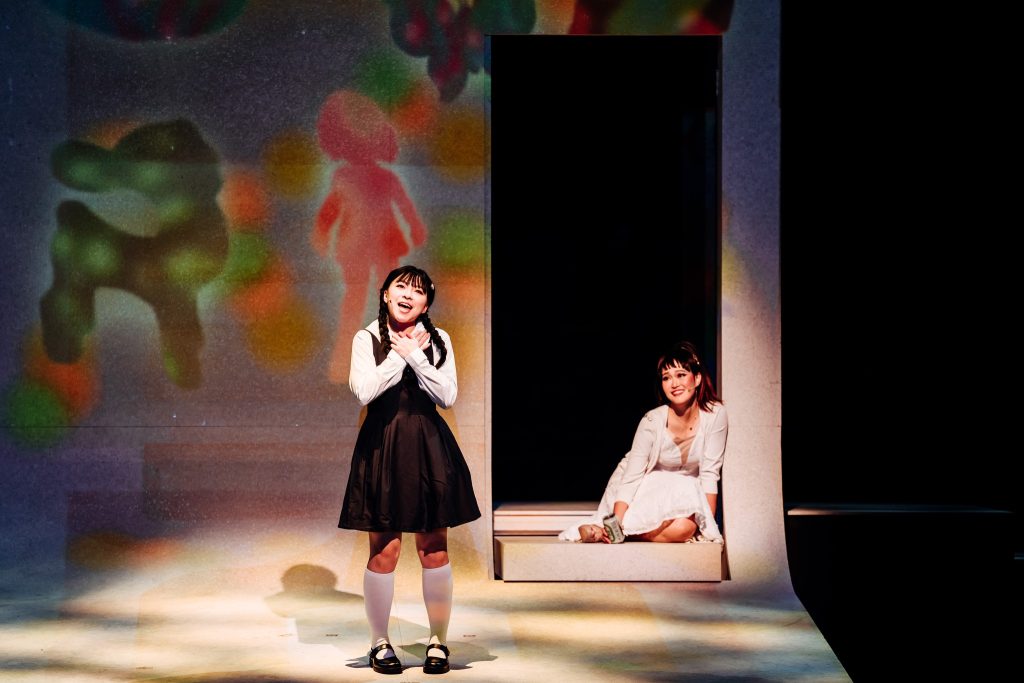
Why does this matter? Taiwan and Portugal both endured long dictatorships where people were deprived of their right to heritage, much like Indigenous peoples here in Canada whose languages and traditions are only now being reclaimed. Our exhibition, The Silenced Years, shares stories of these times in Taiwan and Portugal, while reminding us that even today, dictators still try to shape identities. Here in Canada, we are fortunate to live without fear of speaking freely.
Following this ceremony, our Rally for Taiwan concert will begin. We’re proud to present three groups representing languages once prohibited under dictatorship: TUDI-VOICE singing in Taiwanese (Hokkien), Traego in Hakka, and Lihaw Lihang, an Indigenous artist of the Truku tribe
TAIWANfest uplifts these voices, just as in Canada we continue advocating for linguistic diversity in the arts.

We are also honoured today to have Member of Parliament Jenny Kwan with us. I encourage you to see our exhibition Not Chinese Taipei. Just as hockey is to Canada, baseball is to Taiwan. Yet internationally, Taiwanese athletes must play under the name Chinese Taipei. This injustice especially affects Indigenous players, who already carry a difficult history.
Imagine if Canadian Indigenous athletes were forced to compete under the name British Vancouver—it would feel wrong. These players didn’t choose the name Chinese Taipei, but they deserve the world’s recognition that they are neither Chinese nor from Taipei.
One Moon, One Song
When Canada’s multiculturalism policy was established in the ’70s and ’80s, its intent was to help Canadians preserve their heritage and languages. Yet in practice, many second and third generations lost those connections, leaving only food and clothing as cultural expressions. TAIWANfest challenges this reductionism. We use art and culture to unpack histories, stories, and connections—not just to honour our past, but to build our future.
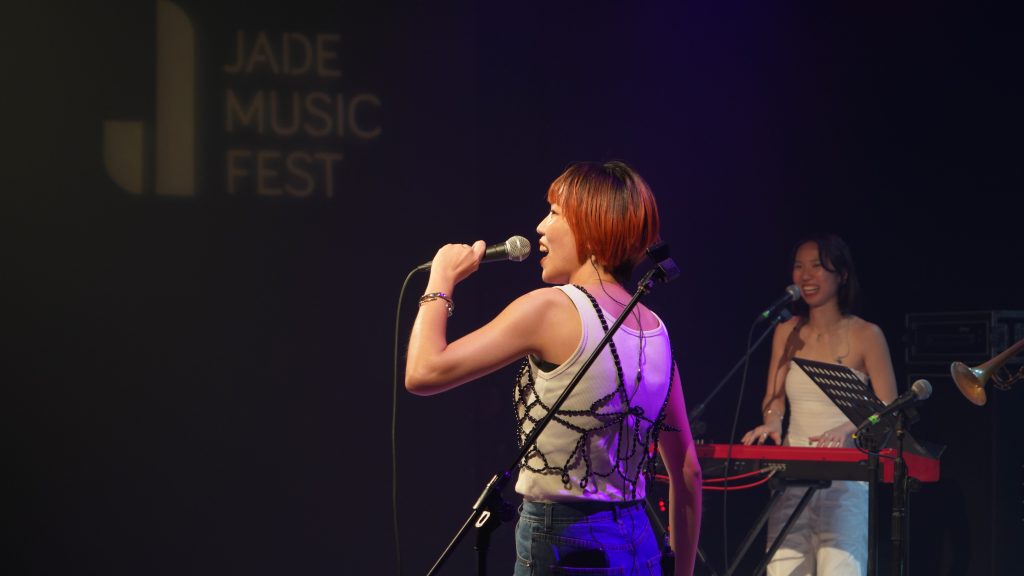
One example this year is One Moon, One Song—a collaboration between a Canadian jazz musician and a Taiwanese hip-hop artist. Together, they incorporate their mother tongues, bridging generations both here and abroad.
Yes, many people come to a Taiwan festival expecting great food and bubble tea. We’ve done our best to curate that. But I want to assure you—Taiwan has so many more beautiful stories to share. They are free, they are enriching, and they are worth your time. Bubble tea shops are open all year; but this weekend, I invite you to be curious, explore our programs, and spark a conversation—about Taiwan, about Canada, or even about Portugal.
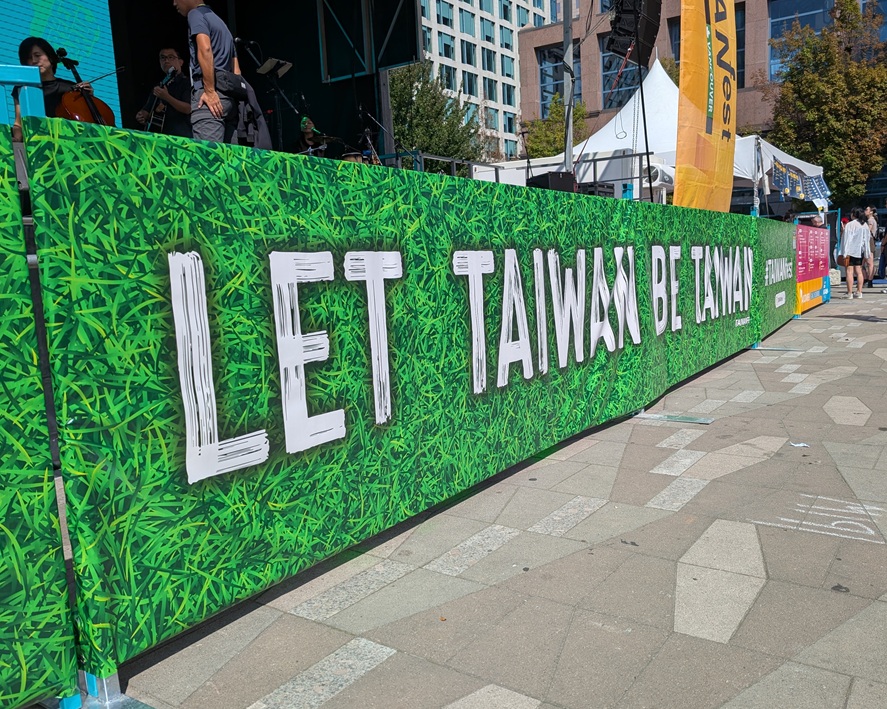
Only when people are free to choose their identity and reconnect with their roots without limitation—and when everyone can stand up to the bullies—will we truly have a better and safer world. When Taiwanese can proudly stand as Taiwanese, and the world can “let Taiwan be Taiwan,” that, to me, is the true outcome of TAIWANfest.
Thank you for listening, and I wish you the most meaningful journey as you explore the festival.
Vancouver TAIWANfest continues through Labour Day (September 1) at various locations in downtown Vancouver. For more information, visit the website. Follow Pancouver on Instagram @PancouverMedia.