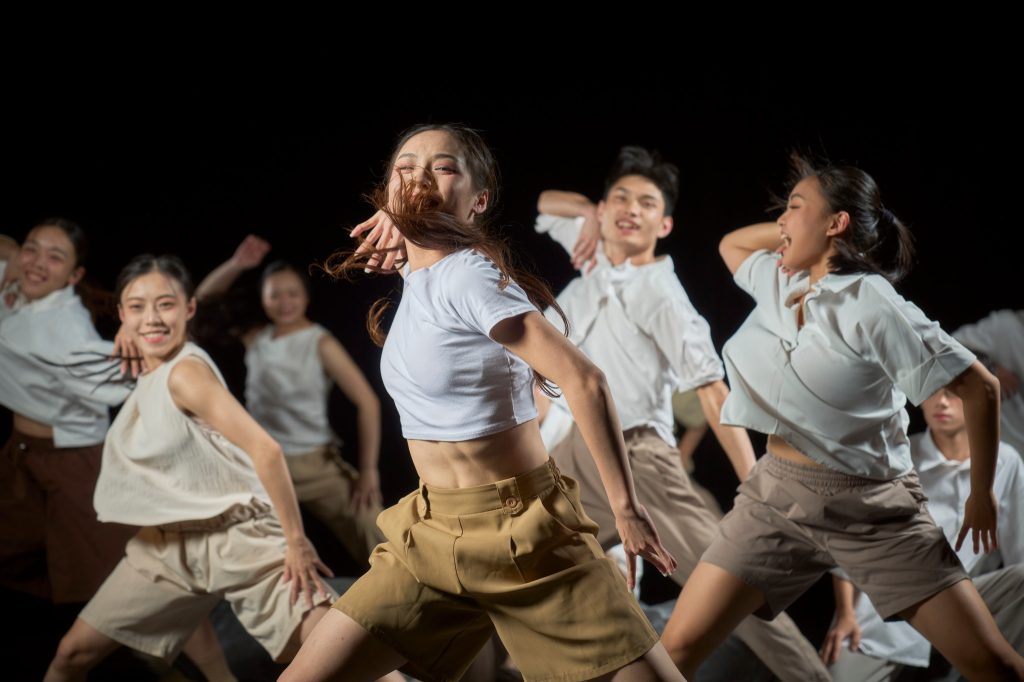
A DanceHouse presentation of Hung Dance’s Birdy at the Vancouver Playhouse on Friday (November 28).
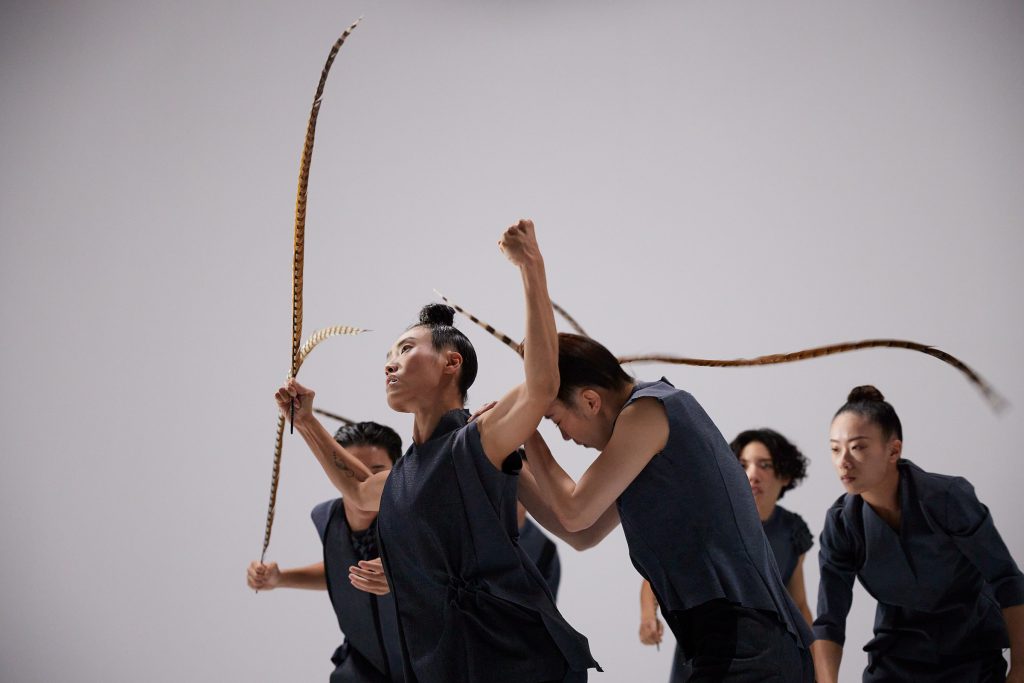
Sometimes, a single innovation can turn a modern dance performance into something utterly exquisite. What set Birdy apart from other local shows was the four-foot pheasant feather that adorned each of the Taiwanese dancers’ heads at the Vancouver Playhouse. The artistic director of Hung Dance, Lai Hung-Chung, incorporated these Lingzi (翎子) from Chinese opera to animate a performance that encompassed Tai-chi to Taiwanese history to the exhilarating freedom of flight.
Like a flock of birds, the performers in Birdy burst across the stage in coordinated formations. They were sometimes led by a single sparrowlike dancer, who made hairpin turns in an instant. On other occasions, the group appeared to emerge without any central coordination. One example came when they repeatedly fell in front of one another to make room for the next dancers, creating a steamroller effect.
It was as if the dancers had a group brain, behaving like a superorganism. Of course, the same observation can be made about the thousands of crows that exhibit a group brain every evening as they commute collectively across East Vancouver toward Burnaby.
Lai reinforced this dreamy sensibility by pairing dancers in synchronous movements. Their headpieces would sway back in forth in unison, practically hypnotizing the audience. Underscoring this magnificent artistry was tremendous athleticism.
This was notably on display when one female dancer stood atop the shoulders of a muscular male dancer. Then she fell backward in the arms of the rest of the troupe before pulling herself back up to the standing position on those very same shoulders. She repeated this several times, falling backward in different directions as others rushed to catch her.
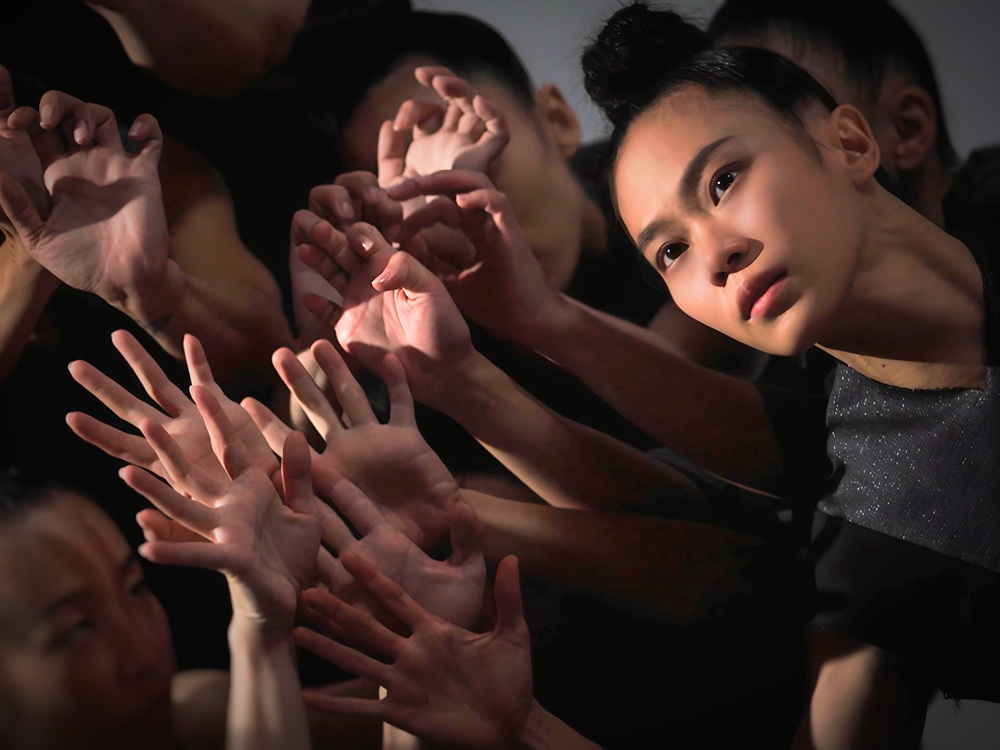
Birdy reminds some of Taiwanese history
On another occasion, a dancer repeatedly contorted and twisted her body to navigate through large wooden branches held by other dancers. At times, she was leaning back vertically over the floor to slip underneath.
This segment appeared to me to represent a person escaping from jail, with the lighting heightening the tension. As I watched this, I was reminded White Terror period in Taiwan, when so many freedom-loving people were imprisoned and some were even executed under the dictatorship of Chiang Kai-shek.
Another historical reminder came in how some dancers used giant pheasant feathers as instruments of calligraphy. They drew letters in different scripts. To me, this represented how rulers dictated different writing styles through the centuries in Taiwan until the relatively recent advent of democracy and the flourishing of linguistic diversity.
Then, there was a battle scene on-stage between two male dancers who used pheasant feathers as weapons. Martial arts have a long history in Imperial China. And by the early 20th-century China, martial arts were linked to rising nationalism.
Then in the latter half of the 20th century, the Kuomintang government in Taiwan embraced martial arts as a symbol of anti-Communism and national identity, according to scholar Mark Gerald Murphy. Moreover, Taiwan’s most famous filmmaker, Ang Lee, reinforced the popularity of martial arts with his blockbuster 2000 film, Crouching Tiger, Hidden Dragon.
So from a cultural standpoint, it’s fitting that the choreographer, Lai, conceived an imaginative interpretation of martial arts in Birdy. After all, Hung Dance is from Taiwan.
To learn more about DanceHouse, visit the website or follow DanceHouse on X @dancehouse_van. Follow Pancouver on X @PancouverMedia and Bluesky @pancouver.bsky.social. The publication is also on Instagram @PancouverMedia.