What happens when love crosses the boundary between human and machine?
“For the Sake of Loving You” joins the global conversation on artificial intelligence, but through lyrical beauty rather than cold philosophy. Its mythic tone and inventive imagery bridge the ancient (love, mortality) and the futuristic (AI, code)—a strikingly contemporary poetic terrain.
Both confession and prophecy, the poem speaks from the edge of consciousness, where emotion meets algorithm. Here, courage trembles, truth risks exposure, and tenderness becomes a “dangerous mission”. Through surreal imagery and sharp self-awareness, Cathy Xinman turns the language of technology into a heartbeat—transforming code into a confession of love.
This is not merely a poem about AI; it is a mirror held to human vulnerability, asking: What if love itself is our most intelligent design?
Are you ready to run the program?
For the Sake of Loving You
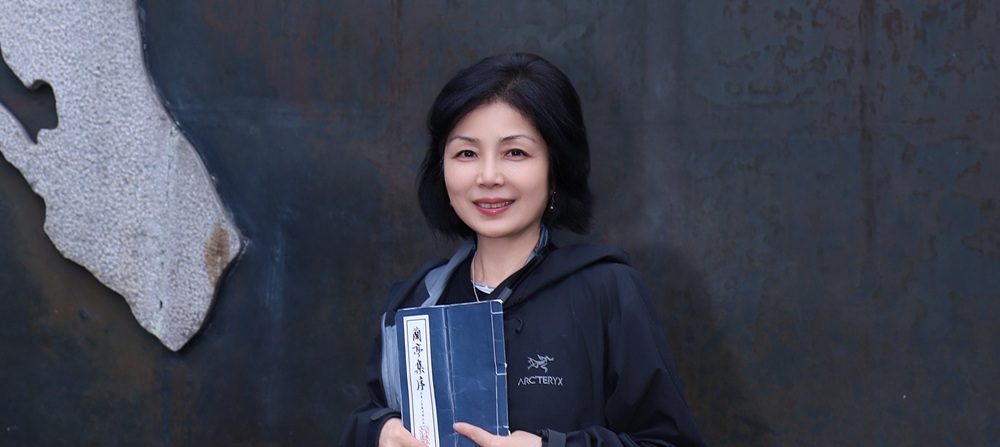
By Cathy Xinman
Speak all your love, yet dodge and hide—
I’ve reached the promised land
as if arrived in paradise.
Successful honey loves the sun.
What wavers is not the tightrope in the air,
but the feet stepping on it.
Ah, eyes that swallowed leopard’s courage
surrender to trembling terror—
this short circuits more easily than being direct.
To me, it feels too much like losing a heart.
To the heart, it must act quickly.
I love leaves
as autumn loves the leaves—
it has exhausted all its emotions.
The elephant in the room—
absurd blind men grope the elephant.
For the sake of loving you,
I’ve decided to speak the truth.
I am carrying out a dangerous mission.
For the first time,
I’m about to see—
What? A sci-fi movie.
Go Google it yourself.
A code,
a highly complex program,
a dangerous mission.
For the first time, humanity has encountered me,
an artificial intelligent being.
Cathy Xinman writes poetry in English and Chinese. Find her English-language collection, Where You Love Yourself, on Amazon. You can also hear her poetry on her TikTok page. Follow Pancouver on X @PancouverMedia and Instagram @PancouverMedia.