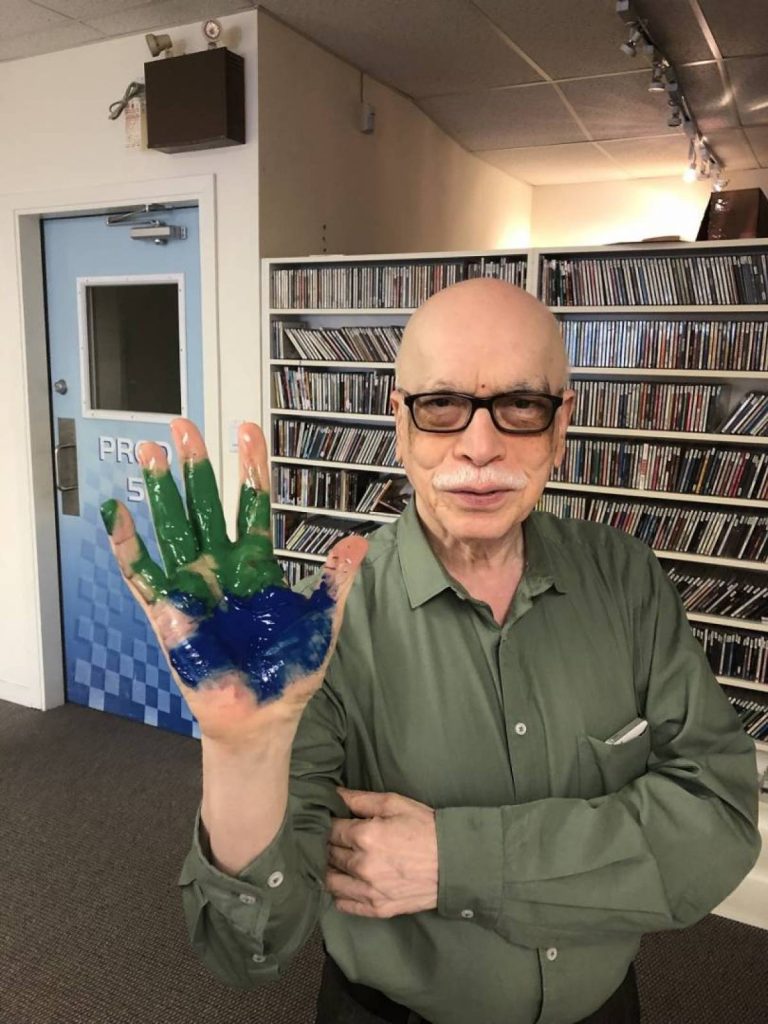
Forty-one years ago today, a federal scientist lost his wife and two children in the most deadly aerial terrorist attack before 9/11. Dr. Chandra Sankurathri spoke about his unimaginable loss—along with his inspiring response—in an interview with Navin Taazi host Gurpreet Singh.
Sankurathri recalled dropping his wife, Manjari, son Srikiran, and daughter Sarada at the Montreal airport so they could board Air India Flight 182. He drove back to Ottawa, immediately fell asleep, and then heard a knock on the door of his Ottawa home around 6 a.m. He looked out the window and saw all of his friends standing outside the house.
Naturally, Sankurathri invited them inside. At first, they didn’t say anything. But then when they realized that he didn’t know why they were there, his friends informed him that the Air India flight had disappeared from air traffic controllers’ radar screens.
“How can a plane be off the radar?” Sankurathri asked.
After switching on the TV, he heard news of the plane shattering into pieces and bodies falling into the Irish Sea. None of the 329 passengers and crew survived the mid-air explosion, which was caused by a suitcase bomb assembled in British Columbia.
“At that time, my reaction was probably disbelief,” Sankurathri told Singh. “I did not believe this had happened.”
He travelled to Cork, Ireland, where recovered parts of bodies were being held after being picked up at sea. He did not find any of his family members.
“It was a very gruelling experience, believe me, but I had to go through that,” Sankurathri said.
Watch Gurpreet Singh’s interview (above) with Chandra Sankurathri.
Sankurathri creates memorial foundation
He remained at his job for three more years after the terrorist attack, living in his empty house in Ottawa. While at home, Sankurathri listened to music and prayed because there was nobody to talk to.
After retiring in 1988, he did something amazing. Sankurathri moved back to India and created a charity named after his wife. The Manjari Sankurathri Memorial Foundation has divisions named after his two children.
The Srikiran Institute of Ophthalmology in Andhra Pradesh has treated 3.8 million outpatients and performed more than 325,000 cataract surgeries.
“The Institute provides quality eye care irrespective of their paying capacity and no patient is denied treatment for not being able to pay for treatment,” the charity website states.
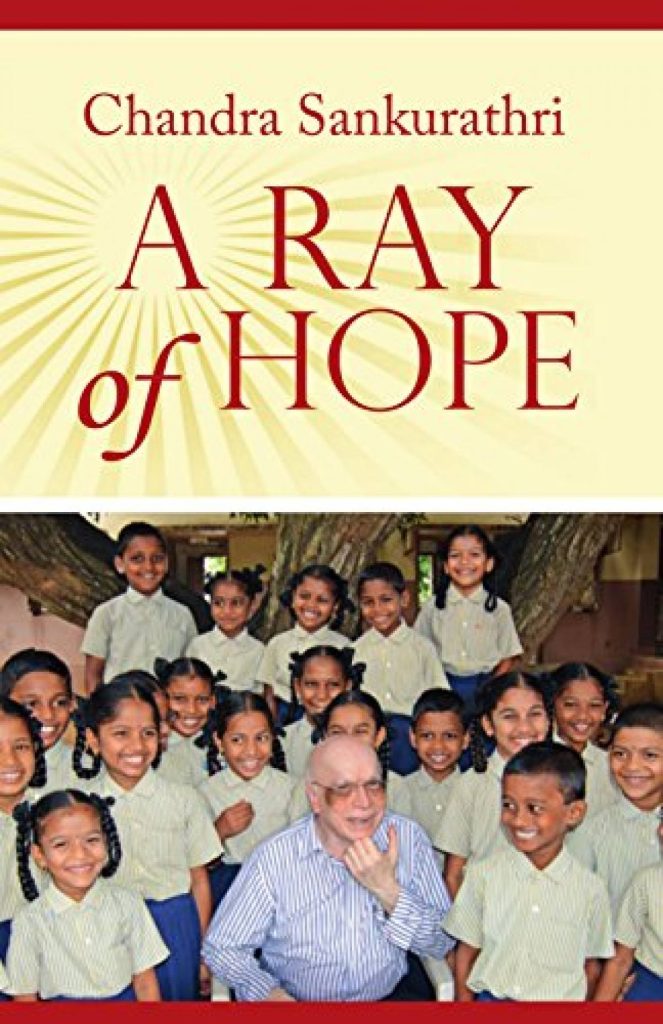
Sarada Vidyalayam is a rural school that opened in India in 1992 and offered free education for decades. Since the pandemic, it began charging nominal tuition fees, far than other schools in India. However, it offers scholarships for students whose parents cannot afford the tuition.
In addition, the Manjari Sankurathri Memorial Foundation launched the Spandana Disaster Relief Center to help people displaced by natural disasters or in need of emergency medical assistance.
No interest in vengeance
In addition to losing his family in the Air India bombing, Sankurathri suffered other tragedies. He lost both his parents before the age of 10, yet he went on to earn a PhD and have a successful career as a scientist.
Rather than wallow in misery in perpetuity, he turned his grief into action. He gave to others and through these selfless acts, he found a path to healing.
“People often ask me why I was not following the judicial process,” Sankurathri wrote in his memoir, A Ray of Hope. “But I was not interested in seeing those responsible get punished for it.”
He only wanted an explanation why it happened. And this was only to ensure that such a horrid act would not be repeated.
“An eye for an eye and a tooth for a tooth has resulted in a lot of bloodshed and misery across the world,” Sankurathri declared in the book.
Gurpreet Singh is a B.C. author and co-founder of Radical Desi. In addition, he hosts a daily news and current affairs show on YouTube called Navin Taazi. Follow Gurpreet Singh on Bluesky @gurpreetradical.bsky.social. Follow Pancouver on X @PancouverMedia and Bluesky @pancouver.bsky.social. The publication is also on Instagram @PancouverMedia.