When we think of solutions to the climate and biodiversity crises, we often imagine technologies, government policies or new infrastructure. But sometimes the most powerful tools are far older and more human: stories, songs, images, and performances. Art doesn’t just decorate our world; it shapes how we see it.
Neuroscience offers evidence for this. When we encounter art—whether it’s a painting, dance, music or story—our brains engage networks tied to emotion, memory and empathy. Studies have found that aesthetic experiences activate the brain’s reward system, much like food, exercise, hobbies, spending time in nature, and social connection. Experiencing art literally lights up our neural pathways, making us more open to new ideas and more likely to activate them.
That matters when it comes to rewilding—restoring ecosystems and their processes and reconnecting people with the natural world. Too often, conservation discussions rely on numbers and warnings. But facts alone don’t always move people. Art is an affecting way to bridge the gap between data and action.
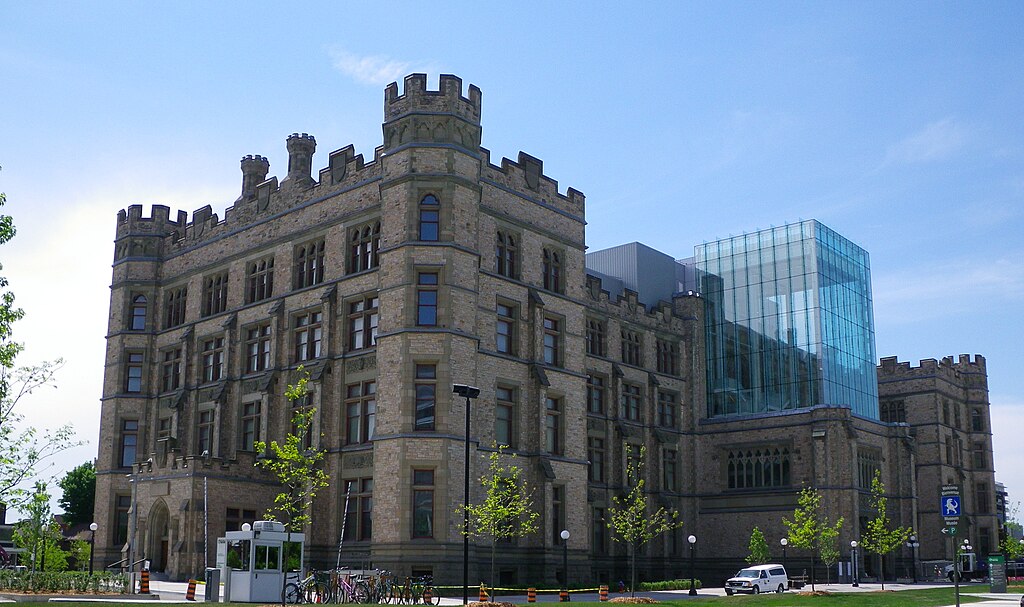
That’s why the David Suzuki Foundation and Rewilding magazine launched the Rewilding Arts Prize. This national prize celebrates artists in Canada whose work reimagines our relationship with nature and community. The inaugural prize, launched in 2022, drew more than 550 applications. The winners’ work spans textiles, sculpture, installation, photography, and sound. It’s on view at the Canadian Museum of Nature in Ottawa until October 2025 and is the first major exhibition in Canada devoted entirely to rewilding-themed art.
Art influences perceptions
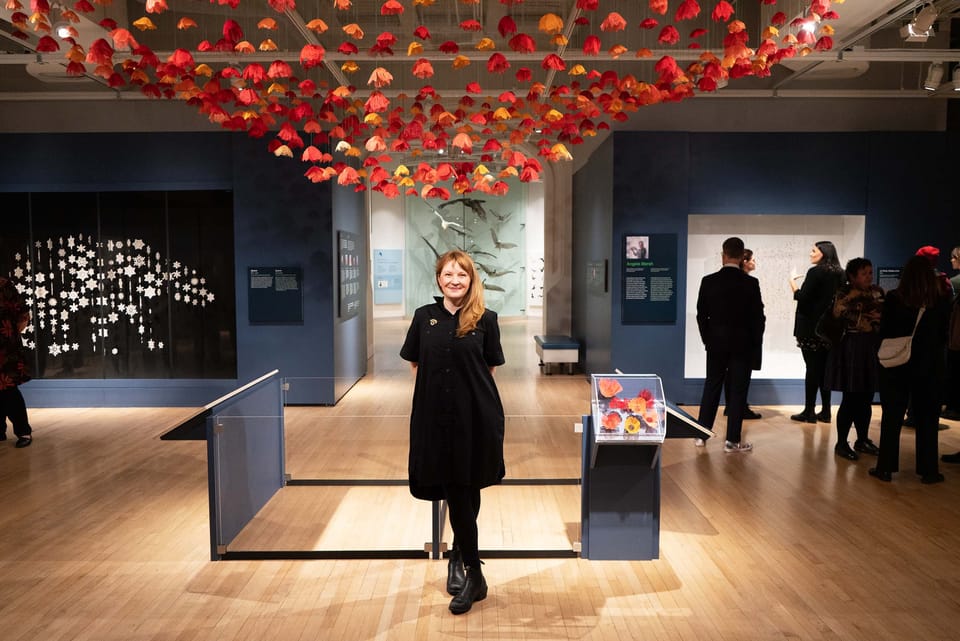
Walking through the museum, you arrive at Amanda McCavour’s embroidered garden of 500 poppies suspended above, fragile yet immersive, transforming the gallery into a rewilded ecosystem of thread and brilliant colour. Natasha Lavdovsky’s moss and lichen–inspired work blurs the line between art and science, inviting us to see rewilding as a partnership with often overlooked organisms that stitch ecosystems together. Amber Sandy’s birchbark and hide works honour Indigenous knowledge and relationships with the land, rewilding cultural connections alongside ecological ones.
These works aren’t just beautiful; they also change how we perceive the natural world and how we imagine rewilding our communities.
Science backs up what visitors feel. An abundance of research shows that nature-themed art and place-based aesthetic experiences can strengthen ecological identity and inspire stewardship. Art grounded in environmental contexts nurtures empathy, deepens our connection with nature and motivates pro-environmental attitudes and behaviours.
In other words, art doesn’t just make us think; it makes us care, and caring leads to action.
A 2025 study shows that strengthening human-nature connectedness is essential to addressing climate change and biodiversity loss, and art is uniquely positioned to catalyze that bond. An earlier study, from 2024, notes that environmental professionals often point to artworks that shaped or reinforced their values. Psychologists even describe the “awesome solution”—art that ignites the strongest emotional and cognitive responses, opening people to new perspectives and action. Art doesn’t just reflect our world; it can help us reimagine it and move us to protect it.

Second round of Rewilding Arts Prize
The Rewilding Arts Prize was built on this understanding. By elevating artists who draw attention to the fragility and resilience of ecosystems, we’re helping shift culture. And culture change is at the heart of environmental progress. Laws and policies may set the framework, but people need to envision different ways of living. Art opens that door.
This fall, the David Suzuki Foundation is launching the second round of the Rewilding Arts Prize. From September 18 to November 18, artists from throughout Canada can apply. Five winners will each receive $2,000 and join the Rewilding Arts Collective—a growing network of artists advancing ecological awareness through creative practice. Alongside the prize, there will be a Toronto art show, a panel in Montreal discussing rewilding and art and a national webinar to showcase art’s role in advocacy and community building.
The science is clear: Healthy ecosystems are essential for our survival. But facts and numbers alone can’t tell the whole story. We need artists to spark wonder, shift perspectives and help us envisage a more just, biodiverse future. If we are to rewild our landscapes and communities, we must also rewild our hearts and minds. Science shows us why this matters, and art shows us how.
David Suzuki is a scientist, broadcaster, author and co-founder of the David Suzuki Foundation. Written with David Suzuki Foundation Rewilding Communities Program manager Jode Roberts. Learn more at davidsuzuki.org. Follow Pancouver on X @PancouverMedia and Bluesky @pancouver.bsky.social. Pancouver is also on Instagram @PancouverMedia.