
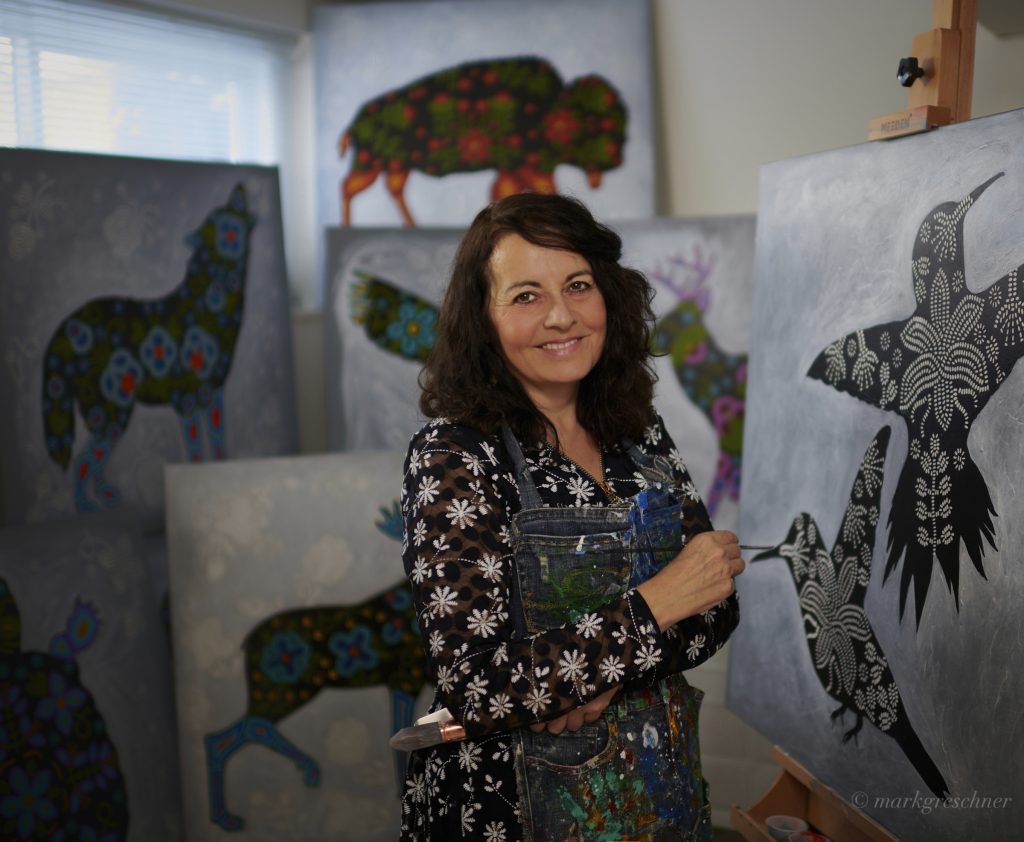
Regina artist Phyllis Poitras-Jarrett says that as a Métis woman, she has always felt horses running through her blood.
“My wild horse spirit art is an expression of my Métis heritage, capturing the flowing manes and powerful movements that mirror our journey as Métis people,” the retired teacher declares on The Lantern City website.
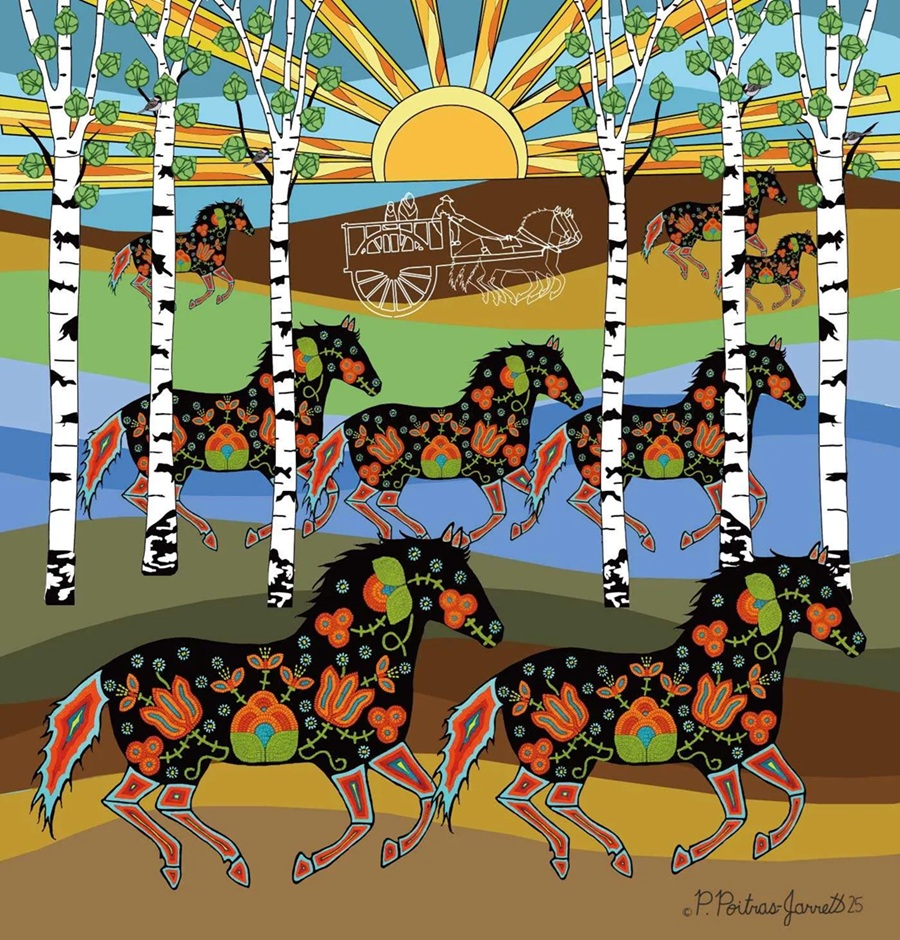
The Asian-Canadian Special Events Association included Poitras-Jarrett’s Riding the Wind with Mother Earth in one of its Lantern City exhibitions welcoming the Year of the Horse. Her painting features nine beaded horses along with a horse-drawn Red River Cart making their way across a sunny landscape.
Riding the Wind with Mother Earth is one of 10 designs gracing a row of large Lunar New Year lanterns in Robson Plaza (800 Robson Street) until March 9.
“The 2026 Lunar Year of the Horse embodies energy, independence, and the strength to brave challenges,” Poitras-Jarrett notes on the website. “These were all qualities our ancestors needed as they built communities across the windy Prairies.
“The horse runs with its eyes focused forward and despite the wind it continues on with resilience and determination,” she continues. “Our Métis people have always stood strong against the winds of oppression and cultural erasure. My horses face into the wind, just as Métis people have faced challenges with dignity and unwavering spirit.”
Poitras-Jarrett emphasizes harmony with life
The beads are no coincidence. The artist’s Kokum (grandmother), Celina Poitras, was a flower bead worker. In a 2023 interview with Pancouver, Poitras-Jarrett explained that the Roman Catholic religious organization, the Grey Nuns, taught Métis people about floral embroidery.
“Then, eventually, the glass bead became available and the Métis women started beading their own unique floral designs,” Poitras-Jarrett said at the time. “It became very popular. They sold their work and made money to survive.”
Poitras-Jarrett’s artistic practice emphasizes harmony with life, embedding Indigenous worldviews into her paintings.
The entire exhibition, entitled We Are a Family, highlights diverse communities, with artists coming from a range of backgrounds. Other lanterns were designed by Anaïs Lera, H. Kristen Campbell, ivyteas, Jacqueline Li, Lanna Souvanny, Lily Tulett, Mustaali Raj, Sharon Leung, and ura jones.
This reflects the Asian-Canadian Special Events Association’s goal of transforming Lunar New Year into a distinctly Canadian celebration, in which all cultures can embrace this holiday in ways that feel right for them. The Asian-Canadian Special Events Association has also curated other free Lantern City exhibitions currently at the Bentall Centre, Pendulum Gallery, šxʷƛ̓ənəq Xwtl’e7énḵ Square (plaza on north side of the Vancouver Art Gallery), and Granville Island.
“Lantern City’s 2026 celebration of the Year of the Horse with its beautiful giant illuminated lanterns are an expression of every artist’s role as cultural light-bearers,” Poitras-Jarrett states.
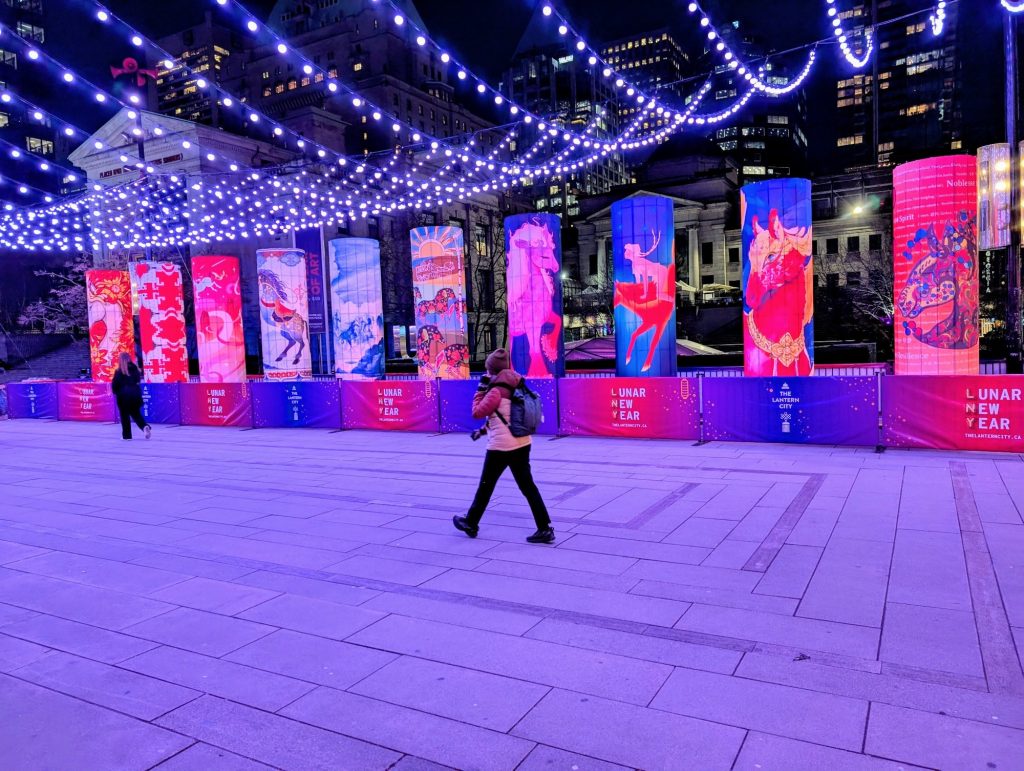
The Asian-Canadian Special Events Association is presenting We Are a Family at Robson Plaza (800 Robson Street) until March 9. For more information, visit the website. Visit the Lantern City website to learn about the other exhibitions. Follow Pancouver on X @PancouverMedia and Instagram @PancouverMedia.




