If you’re a fan of Taiwanese documentaries, you probably already know that historians sometimes play a starring role. Chen Lih-kuei demonstrated this in her Taiwanese Trilogy“, perhaps most vividly in the final installment, The Hidden Transcript of Academician Ts’ao Yung-ho. It shattered assumptions that Taiwanese history should be viewed through a Chinese lens.
Meanwhile, another Taiwanese documentary, Hsu Chia-Wei’s A Performance in the Church, relied on archeologists and historians to reveal little-known aspects of the Spanish colonization of northern Taiwan in the 17th century. He actually re-created a musical performance using ancient instruments on the excavated former site of the Spaniards’ Todos Los Santos Church on Heping Island.
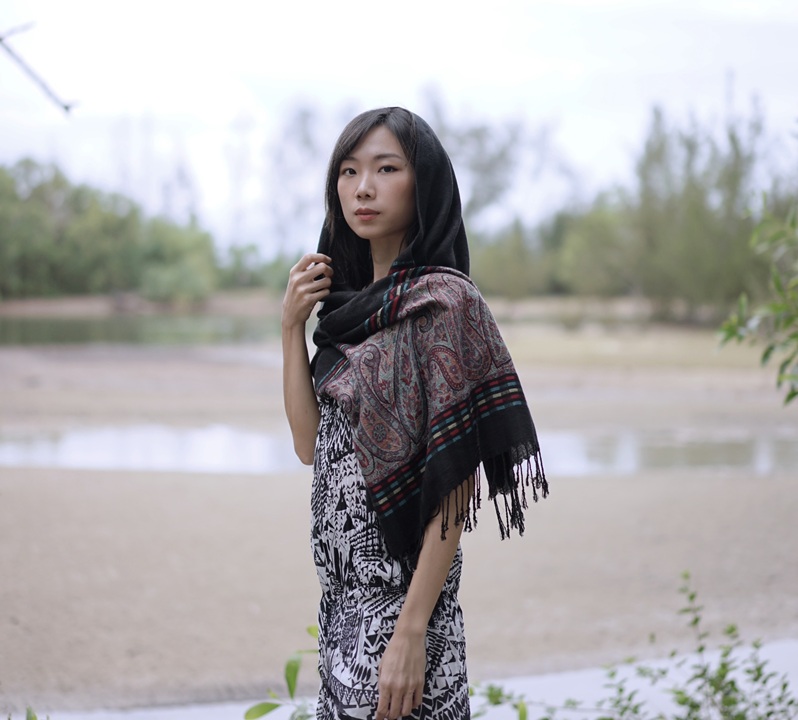
Director Ko-Shang Shen has added to this growing collection of magnificent historical Taiwanese documentaries with his sprawling examination of hundreds of years of Hakka history on the island. Master or Guest 客人主人 opens with Hakka singer Julia Peng standing on a stage in the spotlight. She begins with a provocative question: “Am I the master of myself?”
From there, she speaks about what it’s like as a child being under someone else’s rule, and how hard it is to be oneself under those circumstances.
“Individuals and ethnic groups share the same question,” Peng continues. “In Taiwan, an ethnic group always asks: am I the master? Its name is given from a master’s perspective. So it’s called Hakka—namely, ‘guest’.”
As Master or Guest reveals, the more than four million Hakka people in Taiwan have struggled long and hard to gain their rightful place in Taiwanese society. The chairman of the Yimin Temple, Kuang-Hua Lin, points out that in the earliest days, the Qing government forbade Hakka and female migrants to Taiwan. Rather, the Qing rulers only allowed Hokkien-speaking Minnanese people to move to the island.

Master or Guest captures tenor of 17th century
Several historians pop up in the documentary to describe the evolution of Hakka identity in Taiwan. One of them, Cheng-Hui Lin, notes that Hakka people initially crossed the dangerous Taiwan Strait from Guangdong as migrant workers, sometimes returning home over the winter months.
“I think at first, they came here with no idea about settling down,” she says. “All they wanted was to earn money to take back to the mainland.”
Another historian, Hsueh-Ming Wu, says that in a modern sense, these early Hakka arrivals would be the equivalent of “illegal foreign workers”.
“Nothing is different but the identity,” he declares. “The modern identity is based on nationality. It’s just like you are from Vietnam or some other countries. In the Qing dynasty, people came from Guangdong or ‘Hokkien’. Immigrants came from diverse provinces.”
Over time, with the encouragement of the Qing dynasty, Hakka numbers grew alongside the larger Minnanese population. The historians also assess the significance of certain flashpoints that brought Hakka people in conflict with Hokkien-speaking people, as well as with Taiwan’s Indigenous tribes.
In those days, Taiwan was part of Hokkien Province, which explains why the Hakka people were described as “guests”. The Hokkien language became known as “Taiwanese” in subsequent years, conveying the impression that Hakka was somehow less than Taiwanese.
Hakka saga has happy ending in Taiwan
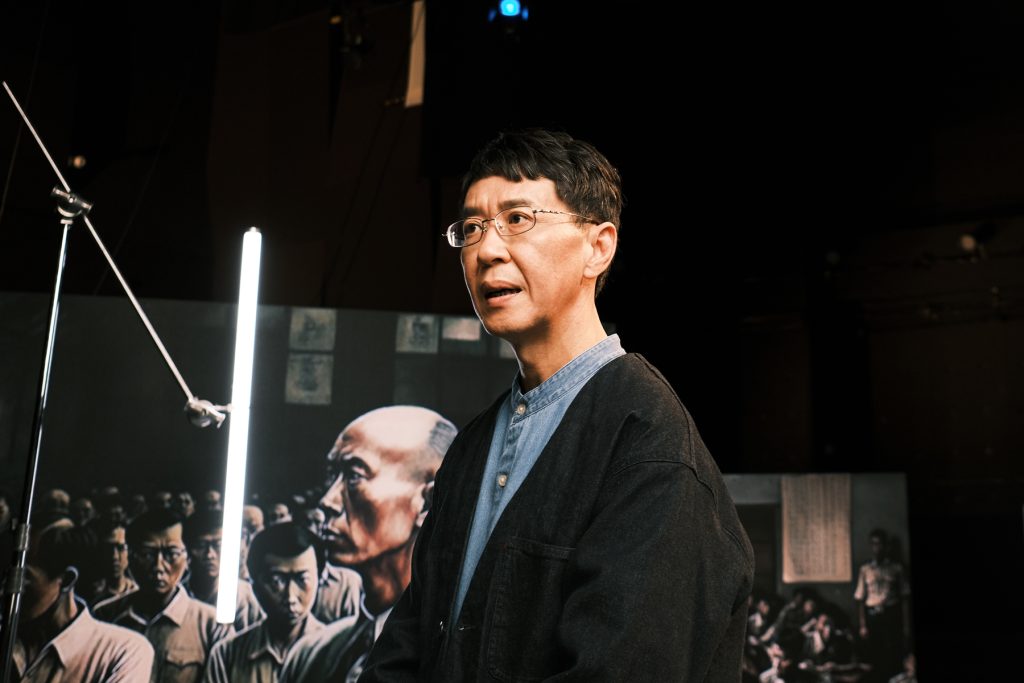
Director Shen makes stellar use of music and Hakka artists as narrators—including actor-composer Yu-Wei Hsieh and musician Sheng-Hsiang Lin. They sometimes speak over impressive animated footage. A prime example comes when Lin discusses the significance of the horrific 228 Incident—referring to February 28, 1947—after the arrest of a cigarette vendor had prompted a large-scale protest. The Kuomintang government under Chiang Kai-shek responded with a bloody massacre against Taiwanese civilians.
It marked a significant moment. Chiang’s government was prepared to crush Hakka and Hokkien residents of Taiwan, demonstrating that they were both now second-class citizens regardless of how much progress they had made over 300 years. That mainlanders-versus-Taiwanese dynamic continued through nearly 40 years of martial law. The documentary reveals that both Hokkien and Hakka speakers were forced to wear humiliating hanging boards around their necks for speaking their languages rather than Mandarin.
Fortunately, this saga has a happy ending of sorts for the Hakka people of Taiwan, thanks to their grit, hard work, and pleas for equal treatment. This has led to fairer language laws, the emergence of a Hakka-language satellite cable channel, and a cabinet-level Hakka Affairs Council.
It hasn’t gone unnoticed in Taiwan that the first president of the Provisional Government of the Republic of China—the highly esteemed Sun Yat-sen—had Hakka ancestry. The same is true of Tsai Ing-wen, who served as president of Taiwan from 2016 to 2024, as well as Mr. Democracy—Lee Teng-hui—who ruled from 1988 to 2000.
In so many respects, Shen’s documentary tells the story of how the Hakka guests emerged as masters of Taiwan. In this regard, Master or Guest offers inspiration to all ethnic minorities in the world striving for respect.
Watch Master or Guest 客人主人 (above) in Hakka with Traditional Chinese and English subtitles.
Toronto TAIWANfest presented Master or Guest at Harbourfront Centre in Toronto on Sunday (August 24). Follow Pancouver on Instagram @PancouverMedia and on Bluesky @pancouver. Follow Charlie Smith on Bluesky @charliesmithvcr.bsky.social.